Haldun Yilmaz set out façade design as a science rather than a surface – a dozen interacting demands, from wind and daylight to condensation and fire, that a consultant must coordinate under the architect’s intent, then prove by simulation and on-site testing.
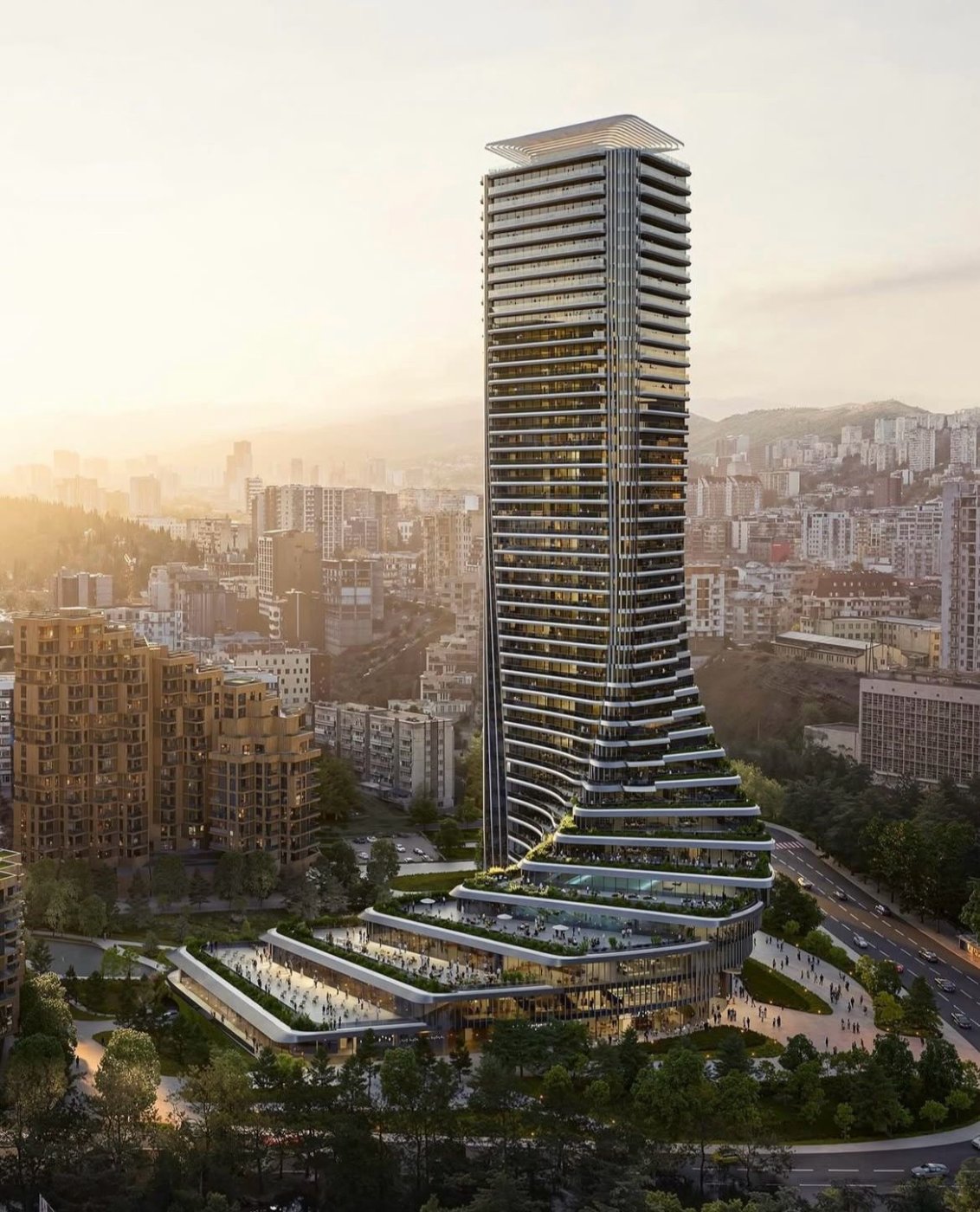
Most people judge a façade by how it looks. Haldun Yilmaz’s case was that the look is the least of it: behind any elevation sit a dozen interacting demands – heat, damp, fire, sound, wind, light, safety, durability – that a façade consultant has to reconcile, always inside the architect’s intent and the client’s budget. High performance, on that account, is not a finish but a balance.
Performance, not the surface
That balance begins with research. Before proposing anything, Yilmaz’s team fixes the building’s type – high-rise, hospital, airport, hotel – and then studies where it stands, because a tower in the Maldives and one in Moscow demand entirely different answers, and each carries its own local codes and regulations. Only then does the work turn to the façade itself, broken down into its exterior wall system parts so that every zone, glazed or clad, can be taken through the same set of criteria. FMT has run that process on more than a dozen Georgian projects, the Zaha Hadid–designed CityZen Tower among them.
The physics you calculate
Several of those criteria are settled with software and coordination. Thermal calculations chase heat loss through every part of the skin, for both energy and comfort – and with it the risk of interstitial condensation, the kind that forms unseen inside a build-up and quietly damages insulation. Solar radiation is taken twice: the heat passing through glass, costed with the MEP engineers as a cooling load, and the heat accumulating on cladding, which governs material choice. Fire brings compartmentation – stopping smoke and flame passing floor to floor, and breaking the chimney effect a ventilated cladding gap can create. Acoustics adds the reduction of both airborne and flanking noise. None is solved alone; each is coordinated with the structural, fire, acoustic and services disciplines at once.
Wind you simulate, light that redesigns
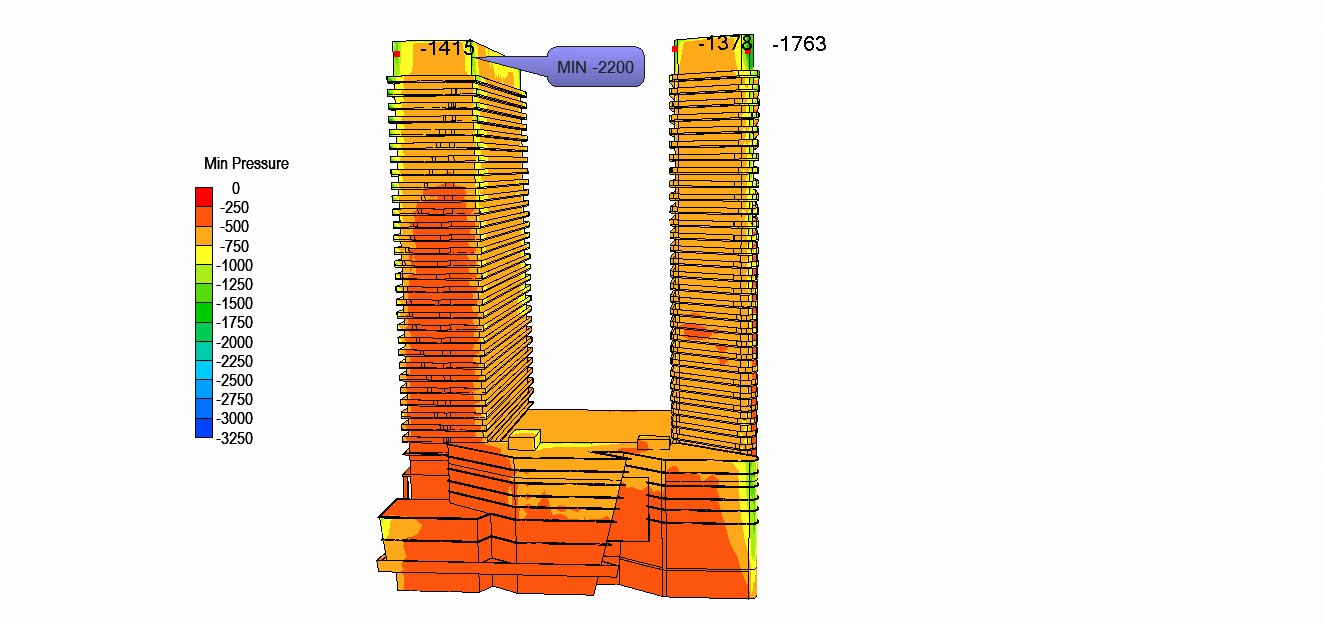
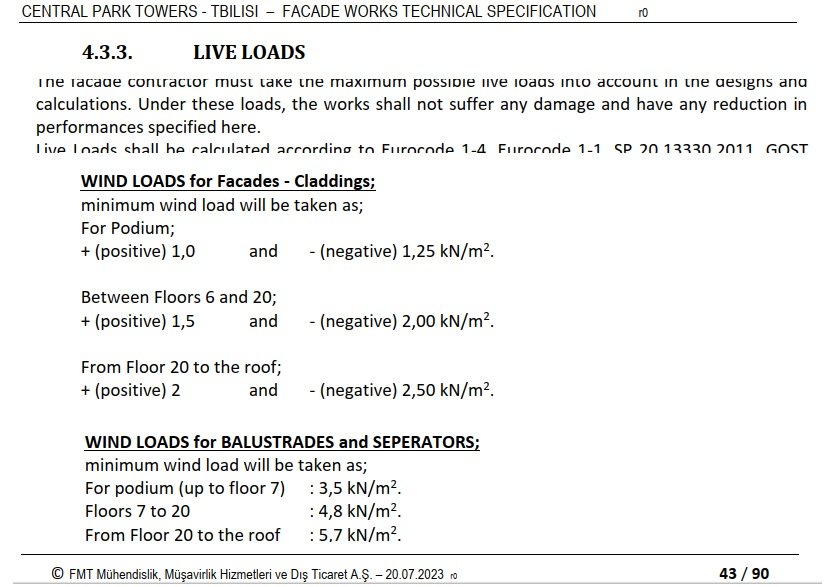
Two criteria repay simulation. Wind comes first – and Yilmaz was careful to separate wind speed from wind load, the pressure the moving air actually exerts on the building. National codes such as Eurocode, ASCE 7 and SNiP give a first figure but run into limits of height and shape; computational fluid dynamics models the building on screen; and the wind tunnel, trusted most of all, puts a sensored solid model into a generated gale to measure real positive and negative pressures, as FMT did with RWDI for the Central Park Towers. Daylight is the second: analysed for CityZen and the Orbi Central Park Towers, it is treated as a design input that can move balconies, terraces and pools, with light shelves introduced where an educational or office building wants daylight without glare.
Proven on site
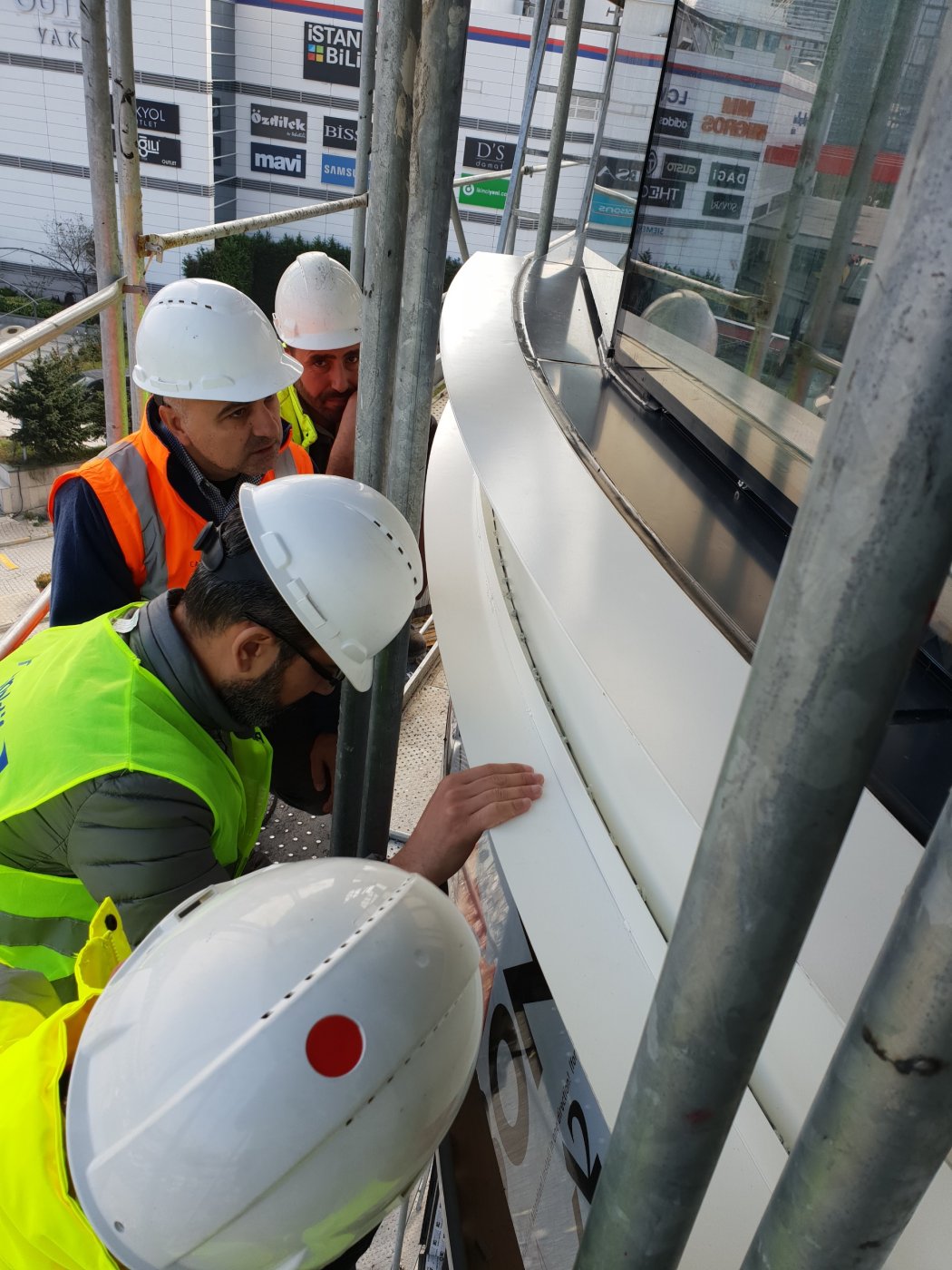
None of it counts until it survives construction. Air permeability and water tightness are designed around pressure equalisation and then checked; the whole assembly is built as a full-size performance mock-up and tested in a laboratory, and tested again during the build, as it was recently on the Orbi Central Park Towers. Through construction, document review and site inspection carry the design forward, because issued drawings are not the end of the consultant’s job.
Everything in a narrow detail
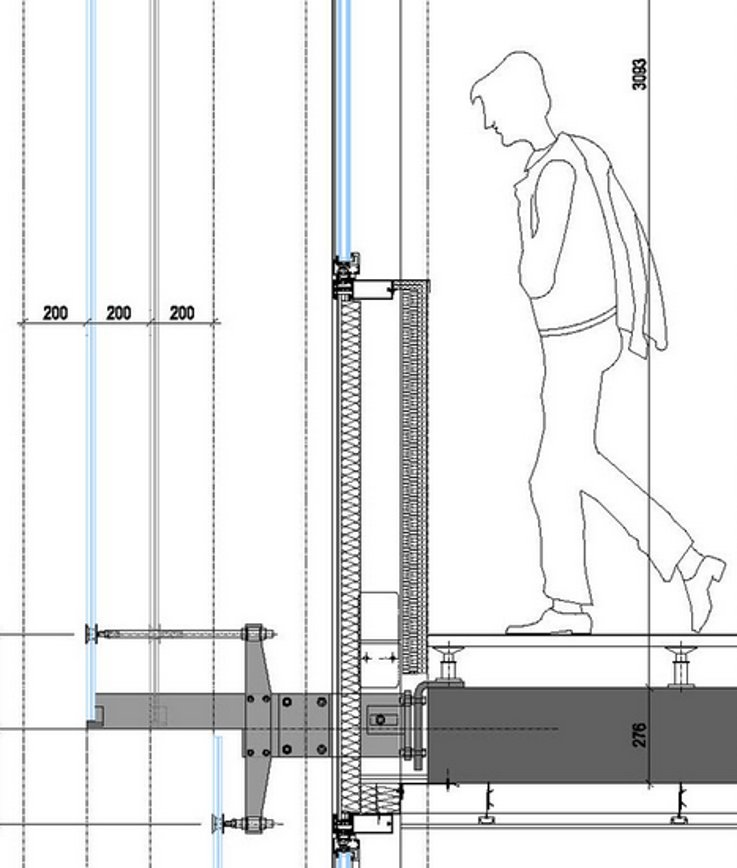
All of this has to coexist in a very narrow part of the building – the layered detail where structure, weathering, thermal performance and every interface meet, and where one measure can quietly cancel another unless they are tuned into harmony. The same discipline covers the criteria that quietly decide whether a building lasts: durability down to the chemistry of sealants and the anisotropy of glass, human safety for residents and passers-by alike, and access for cleaning and maintenance designed in from the start. Even natural ventilation earns its place – small flap vents on the Nest One tower in Tashkent, checked against stack effect and pedestrian comfort. Performance, Yilmaz argued, begins with coordinated criteria and only ends once the building is built.