


Michael Lette, one of BlueScope’s downstream businesses, made the manufacturer’s case for steel: prefabricated panels fixed on only two sides, folded so they become their own flashing, screws hidden in a channel, and a certified test lab behind them. The proof was Western Australia’s rail, seven stations, 20,000 pieces made in Melbourne, over 100 square metres a day going up.
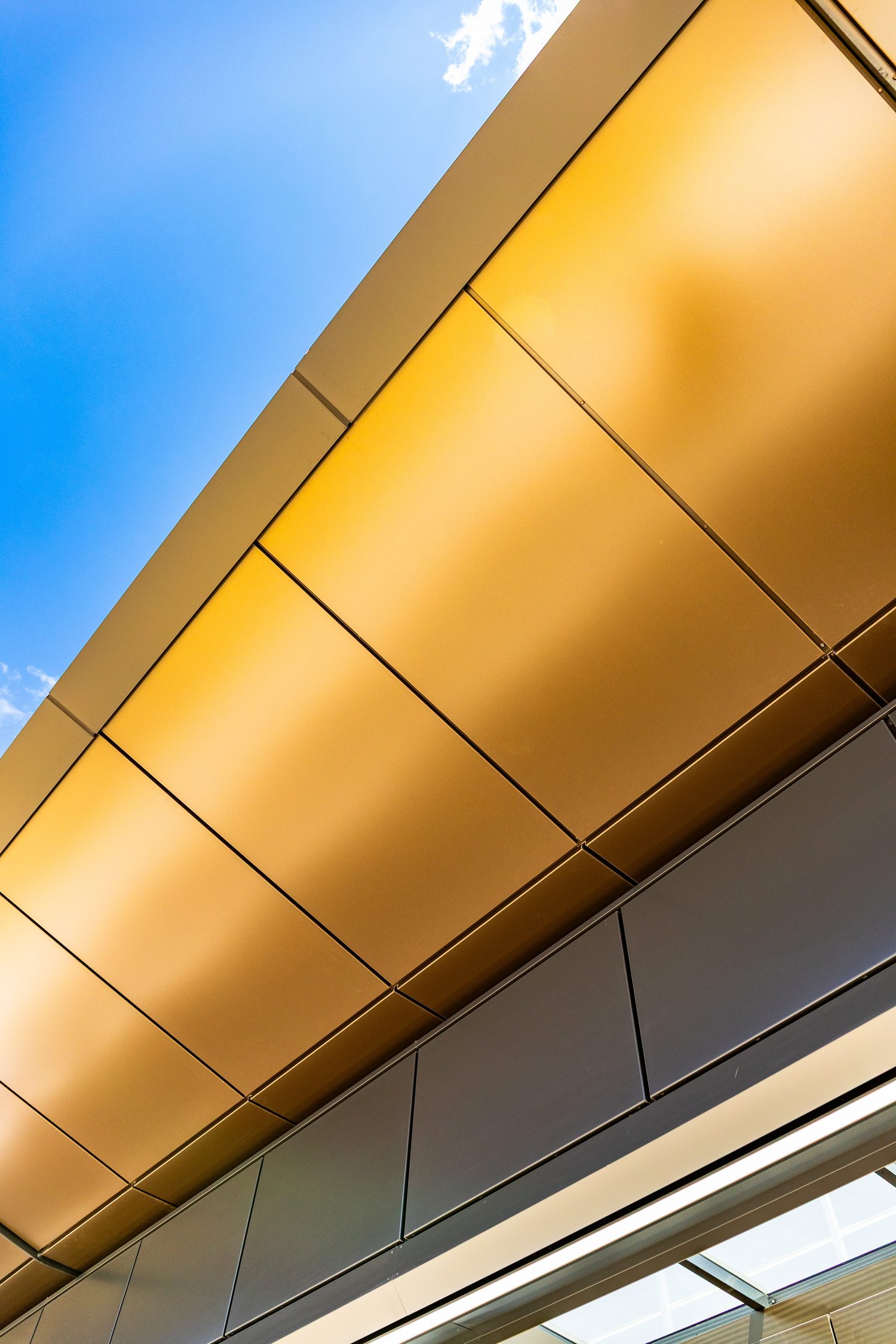
Lysaght and Fielders are two of BlueScope’s downstream manufacturing and solutions businesses, and together they form its façade design and solutions arm. In commercial work the name is known through Aramax, the roofing and the structural flooring. Lette framed the offer around three pillars of the construction industry: labour, where Lysaght sells efficiency; design, where it sells customisation; and compliance, where it sells validated testing, backed by a certified laboratory at Minchinbury in Sydney.
The pitch begins well before site. Early engagement, he argued, is where steel can be shaped to meet a performance requirement rather than fitted around one, and it is consistency, less structure and prefabrication that pull time out of a programme. That mattered in Western Australia, where the projects were running a little behind, as projects do, and the time had to be won back on the wall.
Three systems carry most of the work. Azora is the simple one, a lift-and-fix panel that arrives pre-punched and goes up fast. Horizon is roll-formed with a backing behind it, up to 600 mm wide and 8 metres long. Aramax is the large profile, and its 20-metre clear spans take a great deal of steel structure out of a building. The Kaleidoscope range supplies the profile variety on top of that.
The efficiency argument is physical. Panels are fixed on only two sides, so install teams are small; the folding is done by robotics, so the tolerance holds; and everything comes pre-punched and pre-drilled, the screws going into 1.2 mm steel at 450 to 600 mm centres, which leaves hardly any fixings on a large panel. On the Perth stations that added up to more than 100 square metres a day, finished.
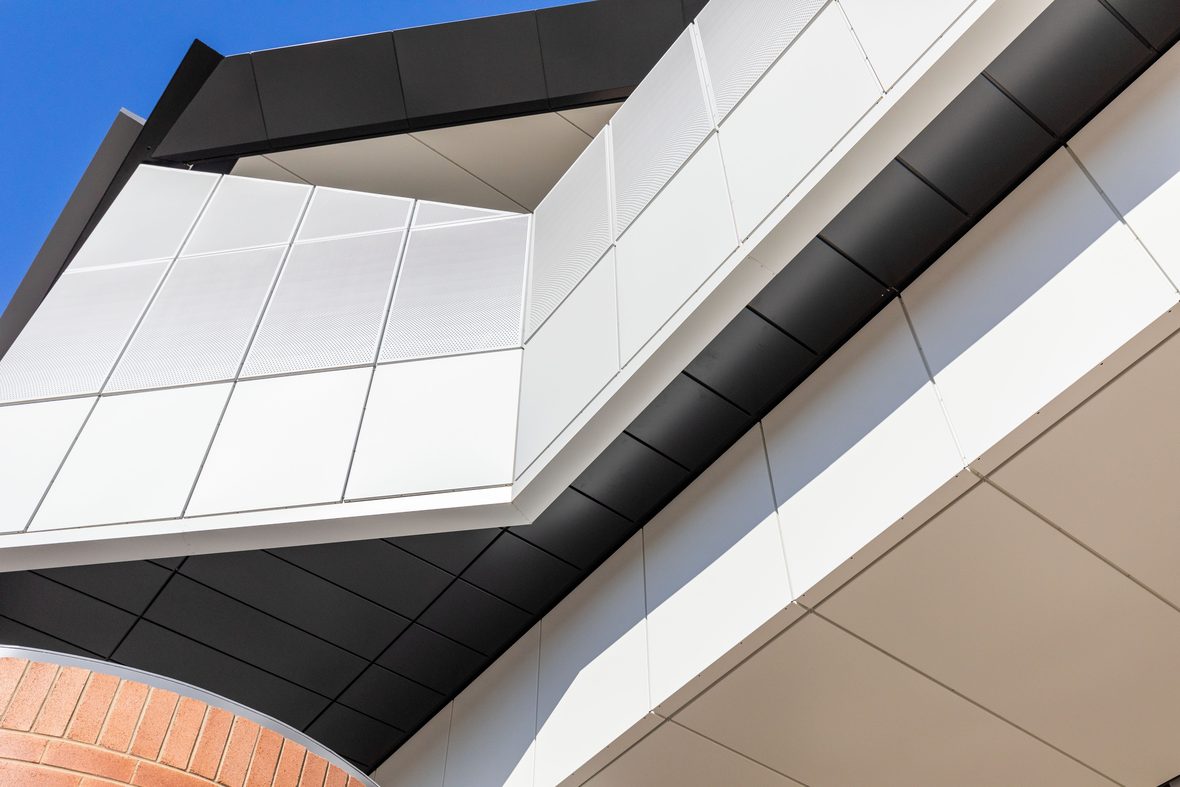
Detailing is where Lette made the aesthetic case. The architectural model had shown flashings everywhere, so the panels were folded instead to become their own flashing and drip line in one, which took the extra structure out with it. Lights, cameras and vents run through the panels themselves. The screws are exposed but colour-matched and set in a 25 mm channel, so you do not see them unless you look straight on. And because the system face-fixes, the smaller panels double as access panels: undo the screws and the wall opens up.
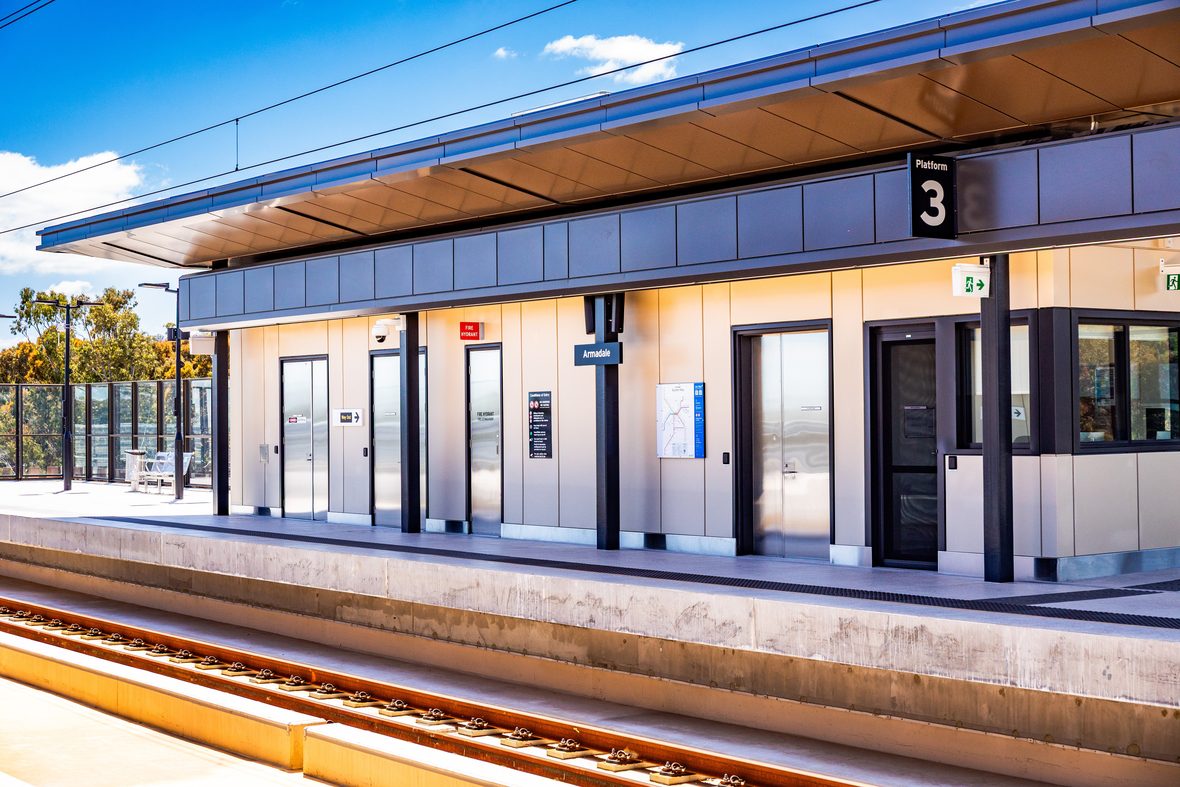
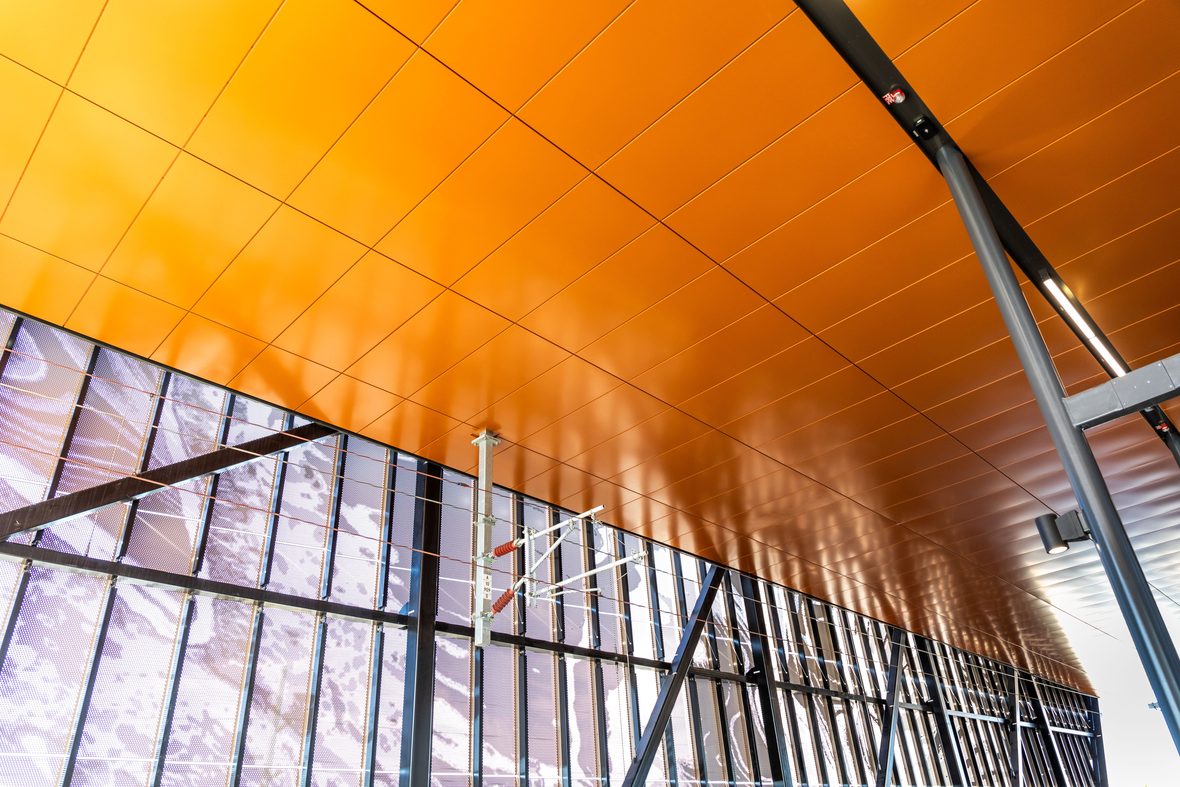
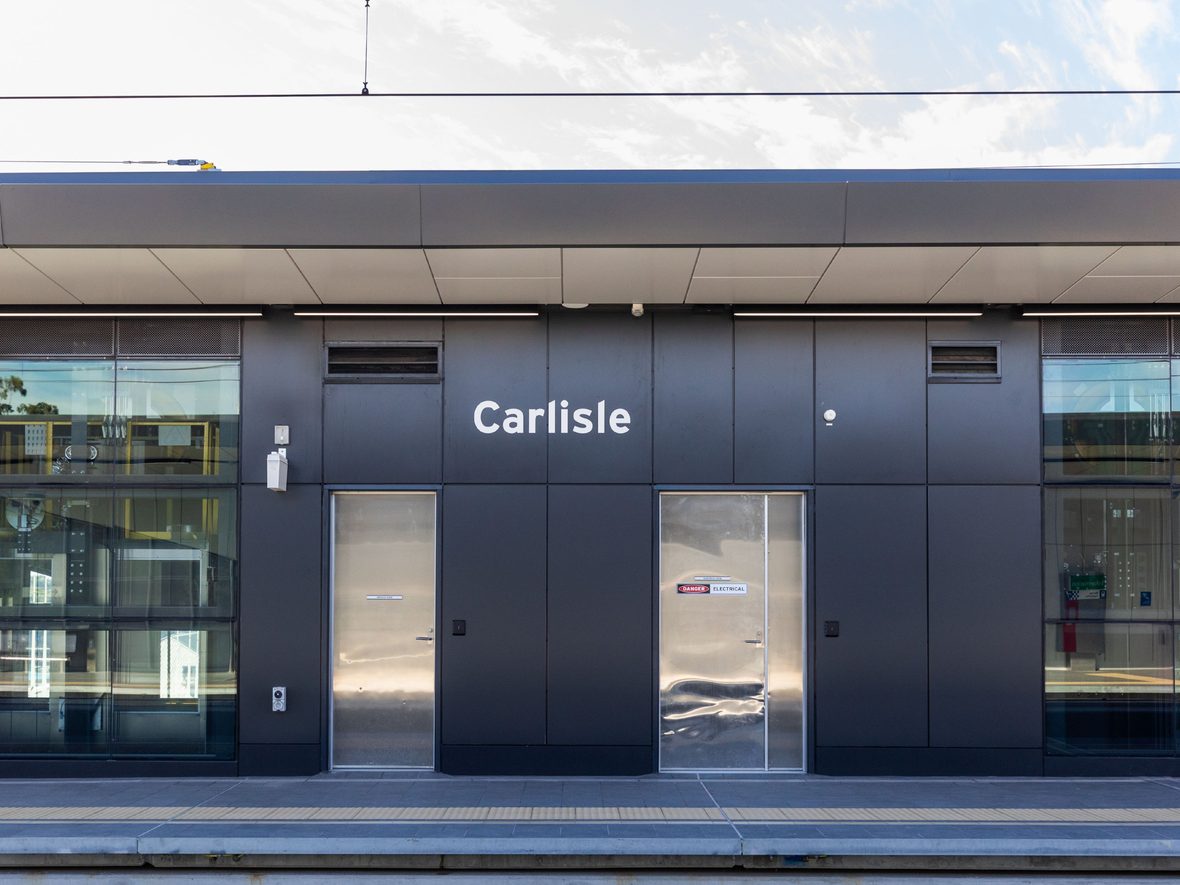
The proof was Western Australia’s rail: five stations and then another two, with Lysaght steel across ceilings, lower walls, site linings, service booms and the coffers at Cannington, which took real collaboration to make every panel line up. Armadale got something new, curved panels in a colour called Cedus, none of them at 90 degrees, copying the curves of the GRC above; and cross-panel ceilings with the lighting integrated, which let the supporting steel come out altogether. The service booms were finished in Umbriel with a mix of Monument, a bronze that takes its glow off the concrete below. Across the two projects, one just over 16,500 pieces and the next just over 3,500, some 20,000 pieces were made in Melbourne and shipped west, going straight out of the package onto the wall.
Behind all of it sits the lab. Lysaght tests strength, impact, connection, fire and weather, weather being the live question now: Azora 40 has been through the AS 4284 weather test into the mid-2 kPa range, with the Proclima membrane system behind it. The facility is also where products are developed, and Lette was candid that its real asset is memory, the long-serving members who know what has been tried and what did not work, alongside the structural engineers and the compliance specialists. Its purpose is certainty, so an architect can push a design and then run it through the rig. The ambition he set out was larger than any panel: to grow the use of Colorbond steel, and with it change how Australia builds.