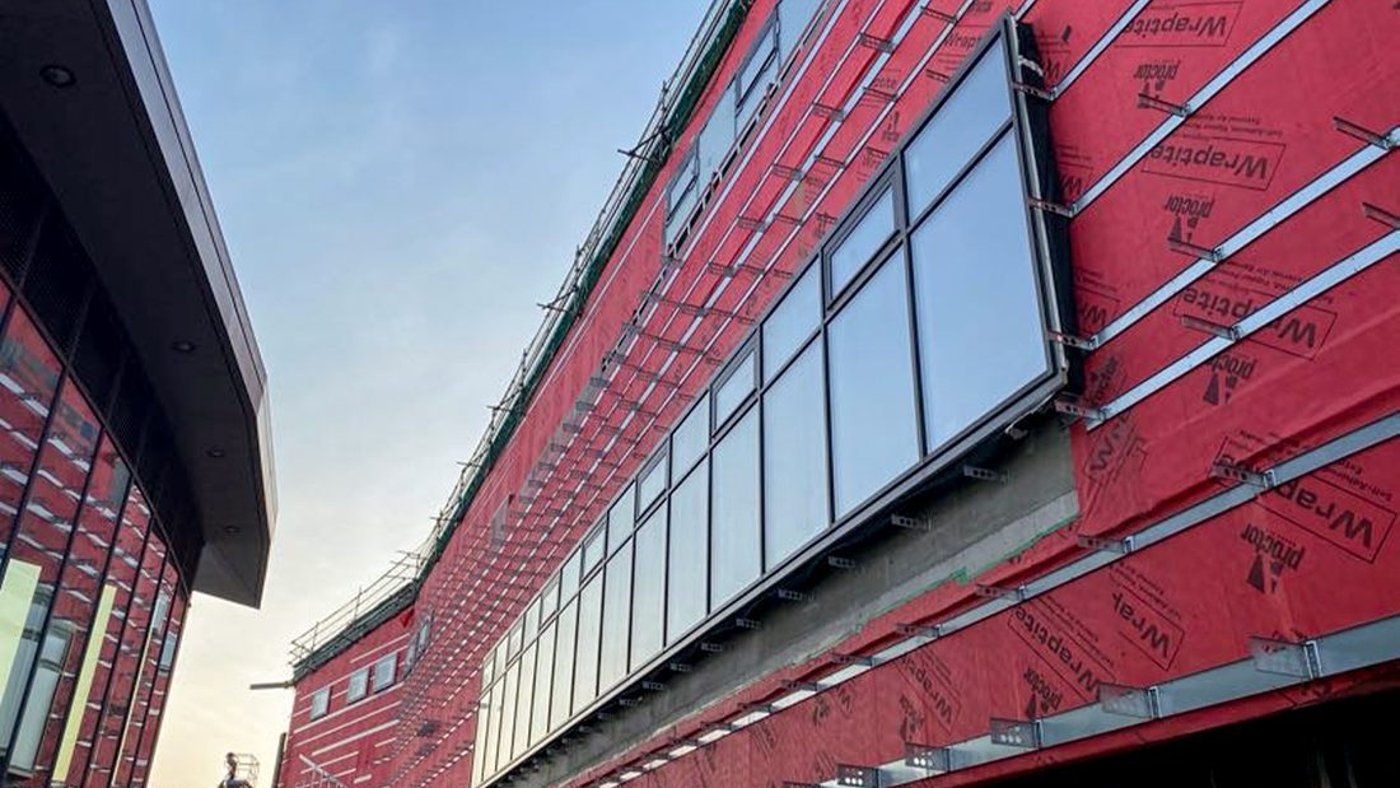
A. Proctor Group's Nick Backhouse made a focused case, that an external air barrier solves the problem internal air-tightness layers keep creating, and that air-tightness, not more insulation, is often the higher-leverage move.
Nick Backhouse, business development manager for England North at the A. Proctor Group, reduced condensation and airtightness to one number. Under BS 5250, the code of practice for managing moisture in buildings, a breather membrane has to exceed an Sd value of 0.12 m, the figure he asked people to carry away. The rest is managing moisture, heat and air together, not one at a time.
Read the building before choosing the product
Fire comes first, he accepted, but two questions precede any membrane. What will the building hold? A student room might take one occupant or seven, and a care home runs its heating in a way an office never does. And where does it stand? A coastal site is one exposure, central Manchester another, where buildings now go up tall enough to be battered by wind-driven rain.
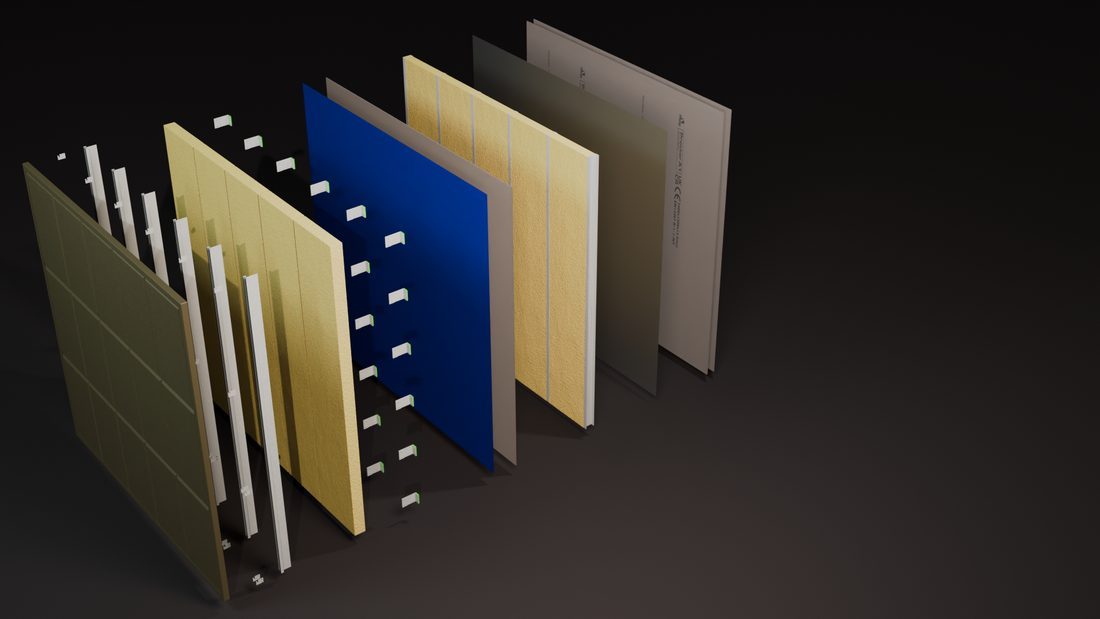
The reference wall, read from the inside out: plasterboard, the internal air and vapour control layer, 100 mm of steel framing with mineral wool in it, sheathing board, a membrane, helping-hand brackets carrying 175 mm of mineral wool, and the rails.
The arithmetic that makes the case
Take that wall at a U-value of 0.15, an air leakage figure of 7 and a dwelling emission rate of 12.18. The obvious route to a better emission rate is more insulation, and it works: bring the U-value down to 0.05 and the rate falls to 11.36, an improvement of 6.7 per cent. The cost is the problem: that U-value takes 630 mm of insulation, and in a city centre there is no footprint to push the façade forward, so the yield of the building shrinks instead.
The alternative leaves the U-value alone and attacks the air: leakage down from 7 to 0.5, achieved with a membrane about a millimetre thick. On his figures that overachieves what the insulation bought, for a fraction of the material.
The problem with the internal line
Traditionally the airtight line sits on the room side, and Backhouse allowed that this can be made to work. Then the building gets used. Trades come through with sockets, lights and central heating, residents arrive and hang televisions on the walls, and every one is a penetration through the layer that was meant to be continuous.
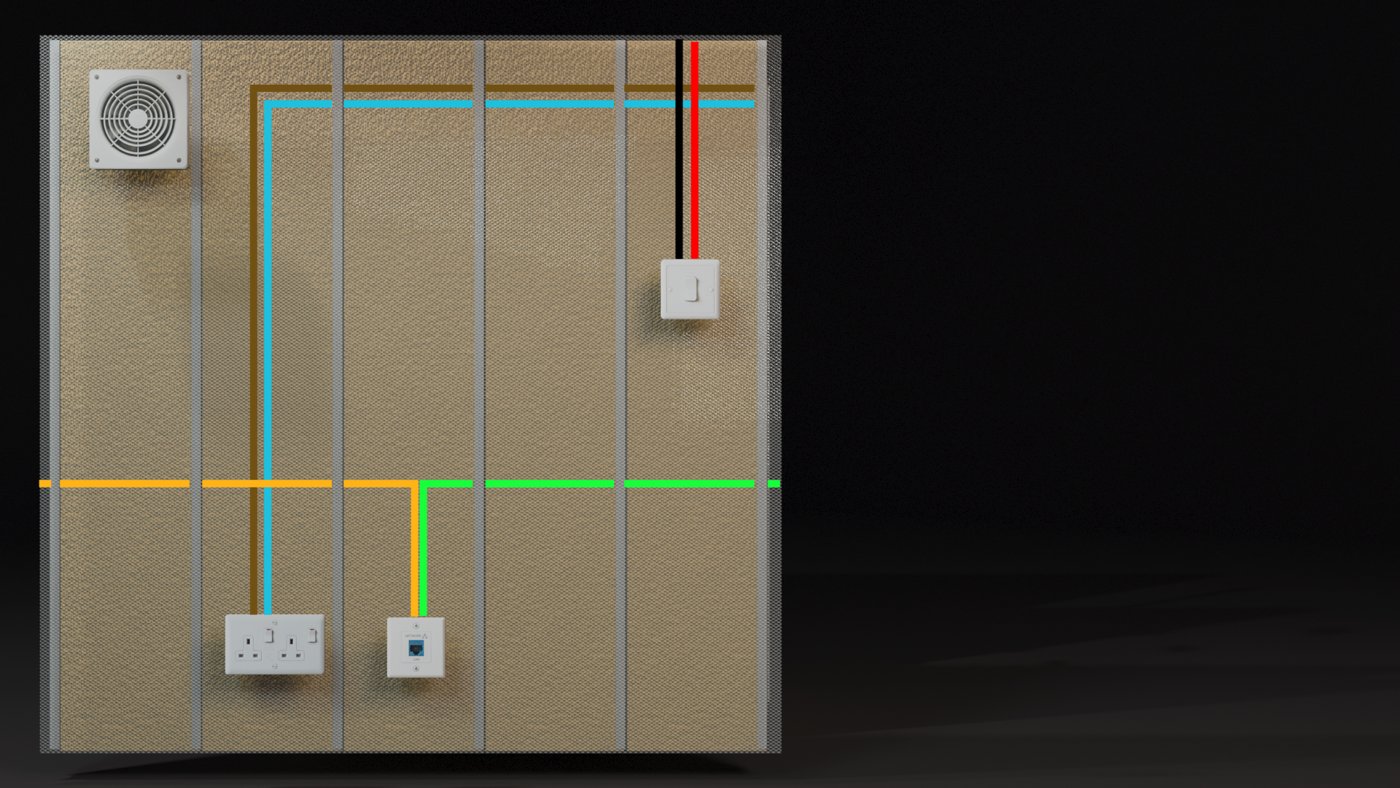
Proctor's answer: take the line to the cold side
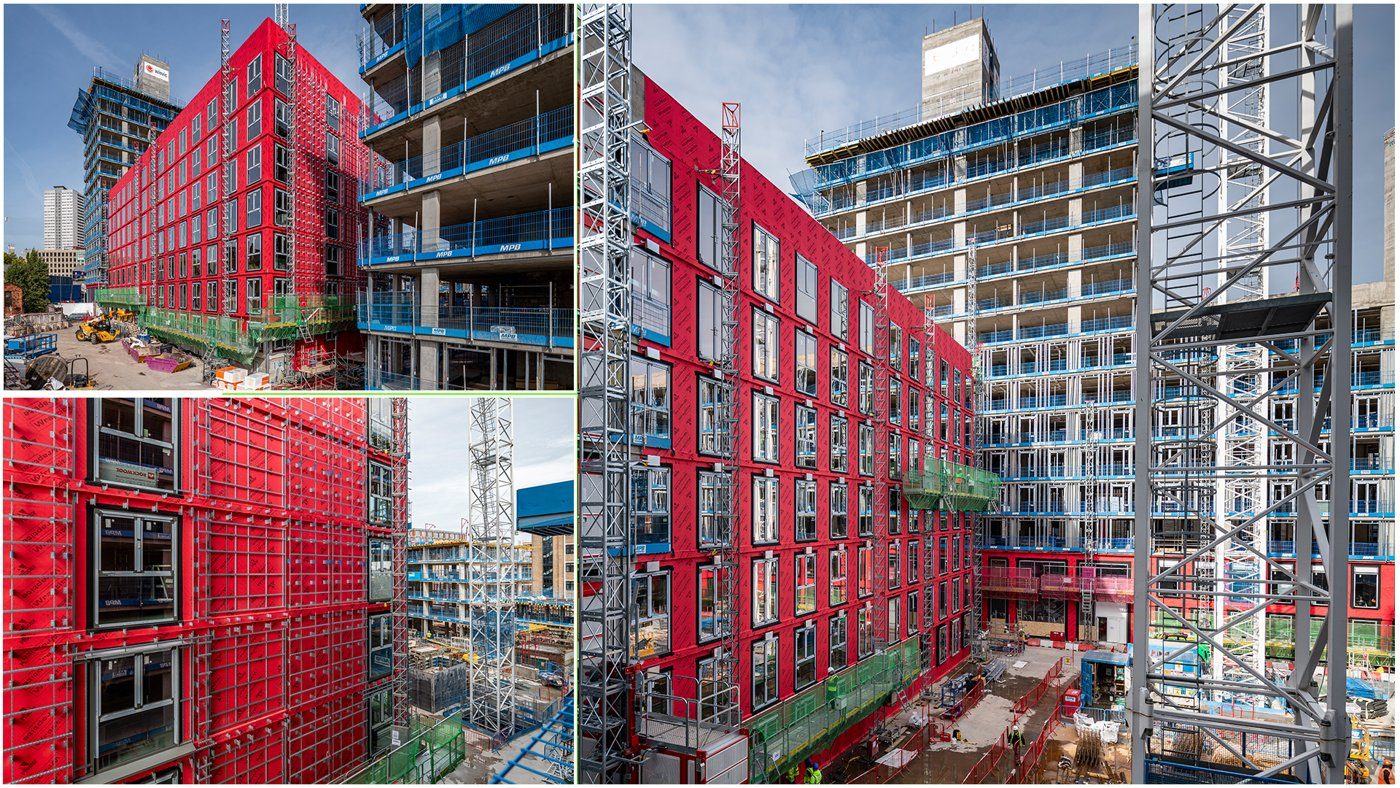
Proctor, a family-owned company based in the Scottish village of Blairgowrie that leans heavily on certification, does it the other way round. Wraptite is a self-adhesive air barrier taken out to the cold side of the insulation, where nothing internal passes through it; plenums, pipework and ductwork are liquid-flashed where they do. It is rollered on and lapped, airtight with immediate effect, and its W1 water hold-out rating protects the structure while the cladding is still to come. Airtight and vapour permeable at once, it is classed as an intelligent membrane, which he explained through a goalpost: the air particles are footballs, the vapour is golf balls you can throw straight through.
The projects he showed run from Kent Road in Birmingham and Air Street in Sheffield to Echo Street in Manchester and Sky Gardens in Leeds, a tower of more than thirty storeys still under construction.
The proof: a Passivhaus leisure centre
He closed on St Sidwell's Point, the first Passivhaus leisure centre in the world, and a building with a swimming pool in it. On completion it reached 0.1 air changes per hour with no internal vapour control layer at all, the airtight line handled entirely on the cold side. Put another way: the total air leakage across the whole building is about the area of a sheet of A4.