


Rodolphe El Asmar and his colleagues took four projects apart: an all-glass entrance at the City of Dreams where four-ply structural fins carry the wind, a Riyadh secondary skin standing 2.5 metres off the curtain wall with 196 kilonewtons at every bracket, a triple-skin tower in Nicosia tested for seismic drift, and a 2012 Beirut façade generating 66 kilowatts. The argument underneath: a façade contractor cannot be only a supplier.
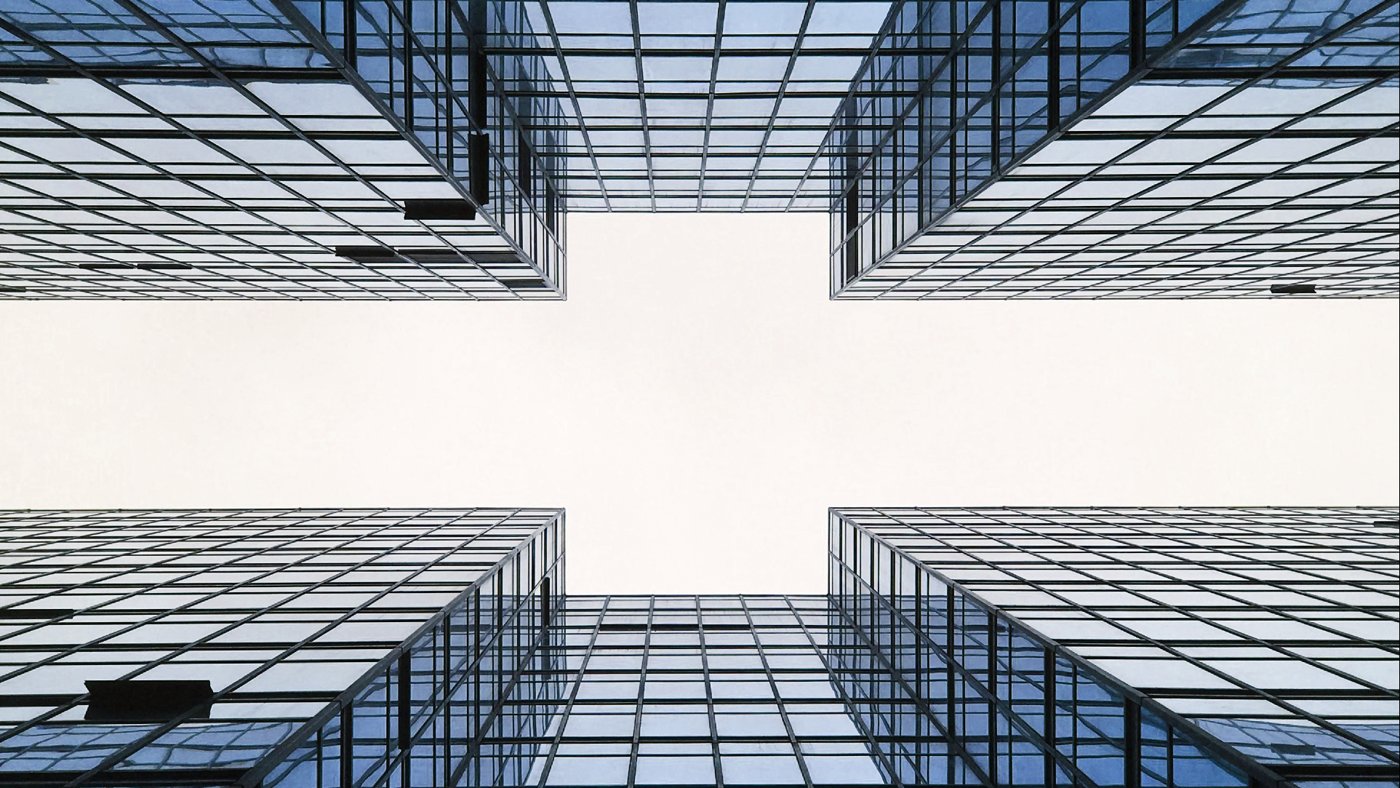
El Asmar’s premise was that a façade is not an external skin and not only an architectural expression, but a complete engineered building envelope, answerable at once to architecture, structure, energy performance, safety, fabrication accuracy, installation constraints, durability and long-term maintenance. Alusteel works across aluminium, steel, glass and cladding from design development through manufacturing, installation and sales responsibility, through four regional hubs, Lebanon where it started, Saudi Arabia, Nigeria and Cyprus, with five factories and around 2,000 staff. Cyprus earns its place by geography, between Europe, the Middle East and Africa, and the value of that spread is fluency: a façade in Cyprus, the Gulf or North America answers to different technical references, approval procedures and performance expectations. Value engineering, he was careful to say, does not mean compromising the design. It means protecting the architectural vision while improving buildability and reliability.
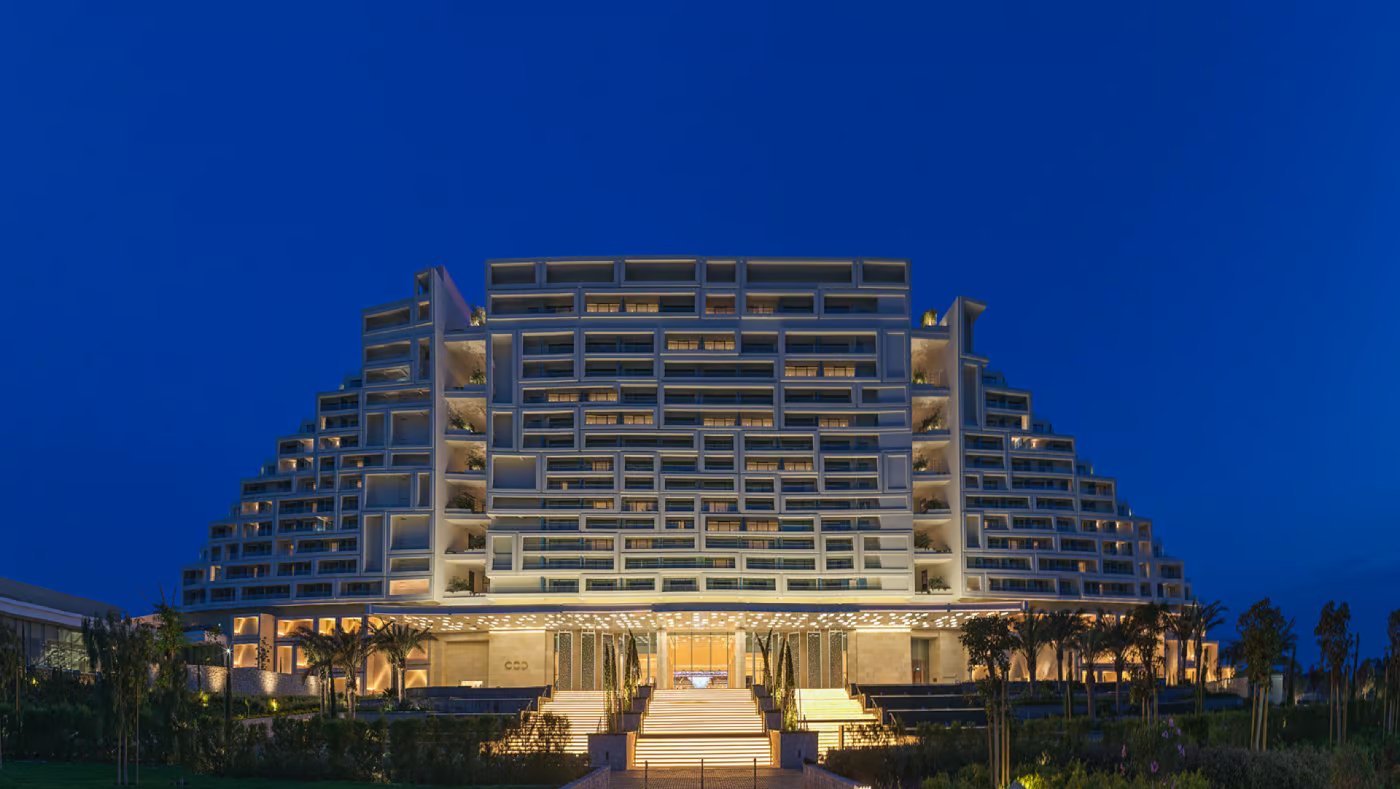
Then four case studies, presented by the colleagues who did them. At the City of Dreams in Cyprus, the brief for the main entrance was total transparency: no visible steel mullions, no trusses, no curtain wall framing. Ghada, from the technical team, explained the answer. Multi-laminated structural glass fins, four layers of 12 mm fully tempered glass with structural interlayers, became the primary load-bearing elements, taking the wind and passing it into the building structure at around 1.75 kilopascals. The value engineering was in cutting the original ten-metre fin in two: a cantilevered four-metre upper section spliced to a six-metre lower one through a meticulously engineered joint, which kept the appearance and transformed the fabrication, transport, installation and future maintenance.
The Misk Foundation Center in Riyadh was a coordination problem. Roland Asmar, one of the shareholders, described a package of unitised curtain wall, architectural louvres, an 18.5-metre freestanding steel curtain wall, automatic sliding and revolving doors, and openings tied into the building management system. Its identity comes from a secondary three-dimensional skin in GRC and aluminium standing about 2.5 metres off the primary wall, and that deep cavity was the difficulty. Because the number of structural connections was minimised, each one had to resist roughly 196 kilonewtons of lateral force from wind, self-weight and maintenance loads, across the cavity, without compromising the curtain wall. Rather than punching multiple penetrations through the façade, Alusteel turned the curtain wall stack joint into the load transfer interface, with engineered brackets inside it, so waterproofing, airtightness, drainage and pressure equalisation survived alongside slab deflection, thermal movement and inter-storey drift.
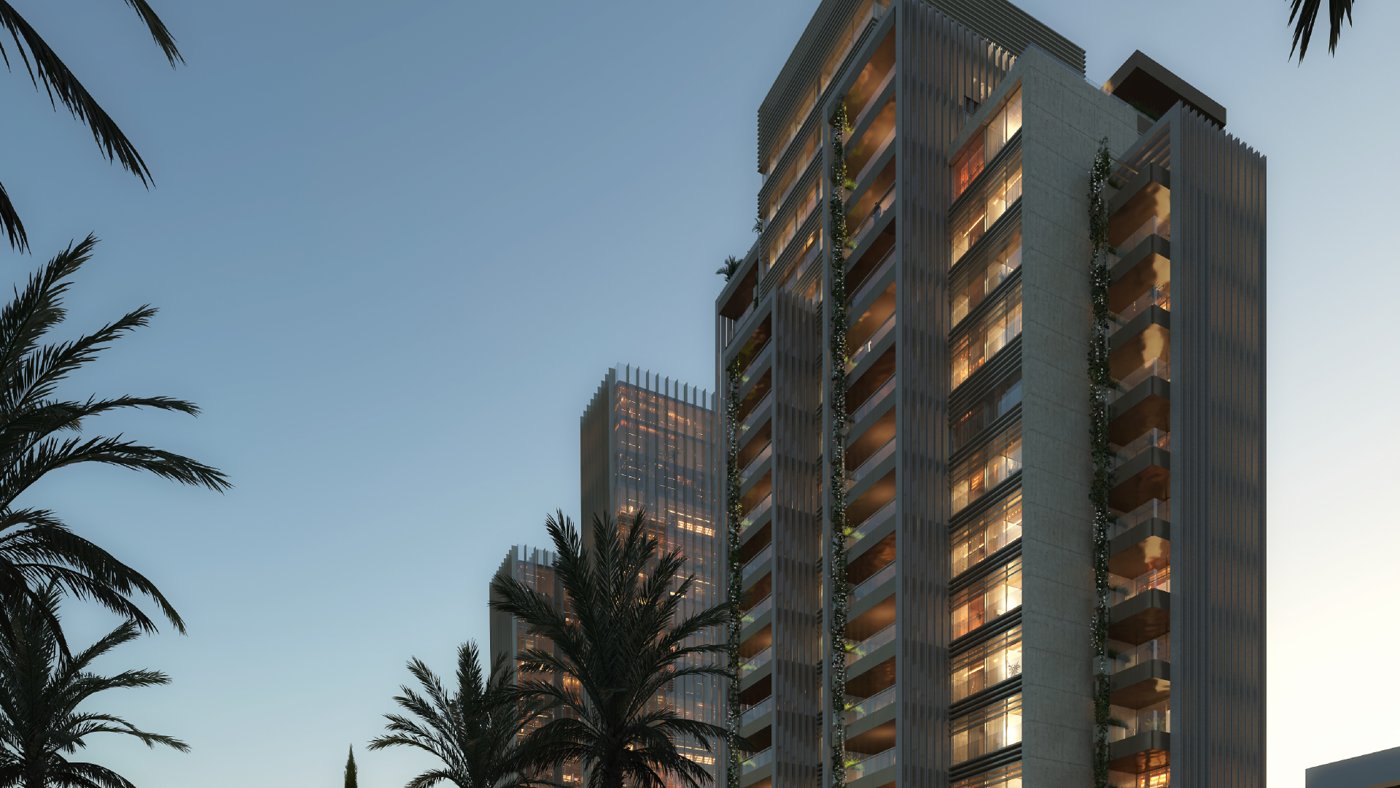
The Landmark in Nicosia is a triple skin. Fadi Jaja, a senior project manager, took it apart: innermost a high-performance unitised curtain wall carrying weathertightness, thermal and acoustic performance, wind load and seismic movement; then a maintenance catwalk outside it, integrated without restricting that movement; and outermost aluminium vertical fins, which give the tower its identity and its shading and generate wind loads of their own, needing dedicated supports. Bespoke connections let all three layers move independently, and the assembly went through full-scale laboratory testing for air and water infiltration, structural loading, wind, seismic movement and inter-storey drift, which is what validates it for a high-rise in a seismic region.
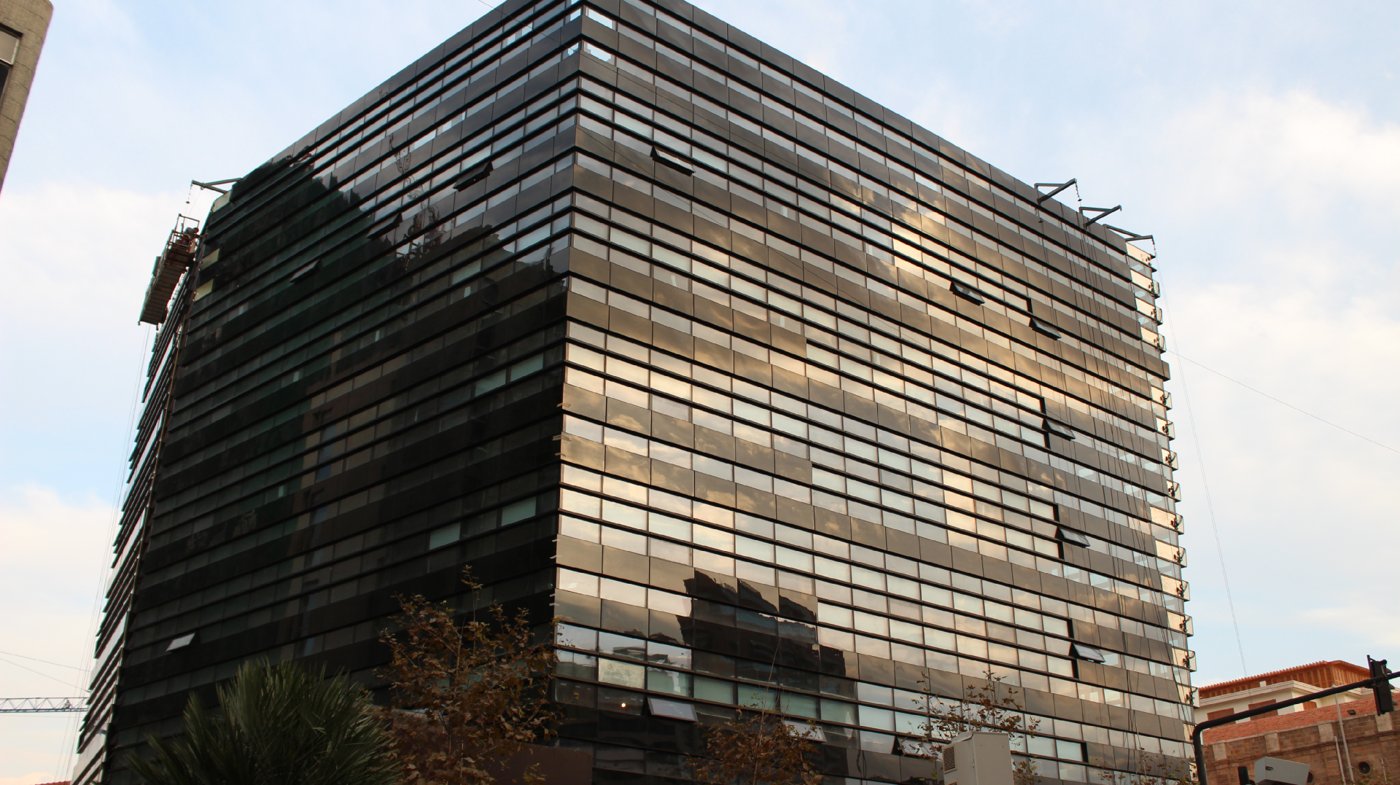
The fourth was the oldest and the point of the sustainability argument. Mina 1394 in Beirut, completed in 2012, took a bespoke unitised curtain wall and made it an active platform: photovoltaics generating around 66 kilowatts peak, enough to help run the common-area services and the parking, plus an integrated LED media façade and architectural lighting, all within one system. Every discipline behind it, façade, structural, electrical, renewable energy, testing, was developed in-house, and the wiring was concealed inside the unitised panel as a plug-and-play assembly, which keeps both the installation and the elevation clean.
Sustainability, on Alusteel’s reading, is mostly durability. A façade that needs early replacement, excessive maintenance or repeated repair is not sustainable whatever its thermal values say, so the question runs from design and manufacturing through installation, warranty and after-sales. Dr Roy Asar, the chairman, added the human version: a façade project carries the architect’s vision, the developer’s ambition, the consultant’s performance requirements, the contractor’s execution challenges and the expectations of the people who will live with it for years. Which gave El Asmar his closing line. The future of the façade will be defined by performance, durability, buildability and responsibility rather than appearance, and in that world a façade contractor cannot be only a supplier.