


Fan Lee brought a machine to prove it: oil on the surface, methyl red as the contaminant, an hour of ultraviolet, and both are gone. An anodised layer of titanium and aluminium oxide that cleans itself in sunlight.
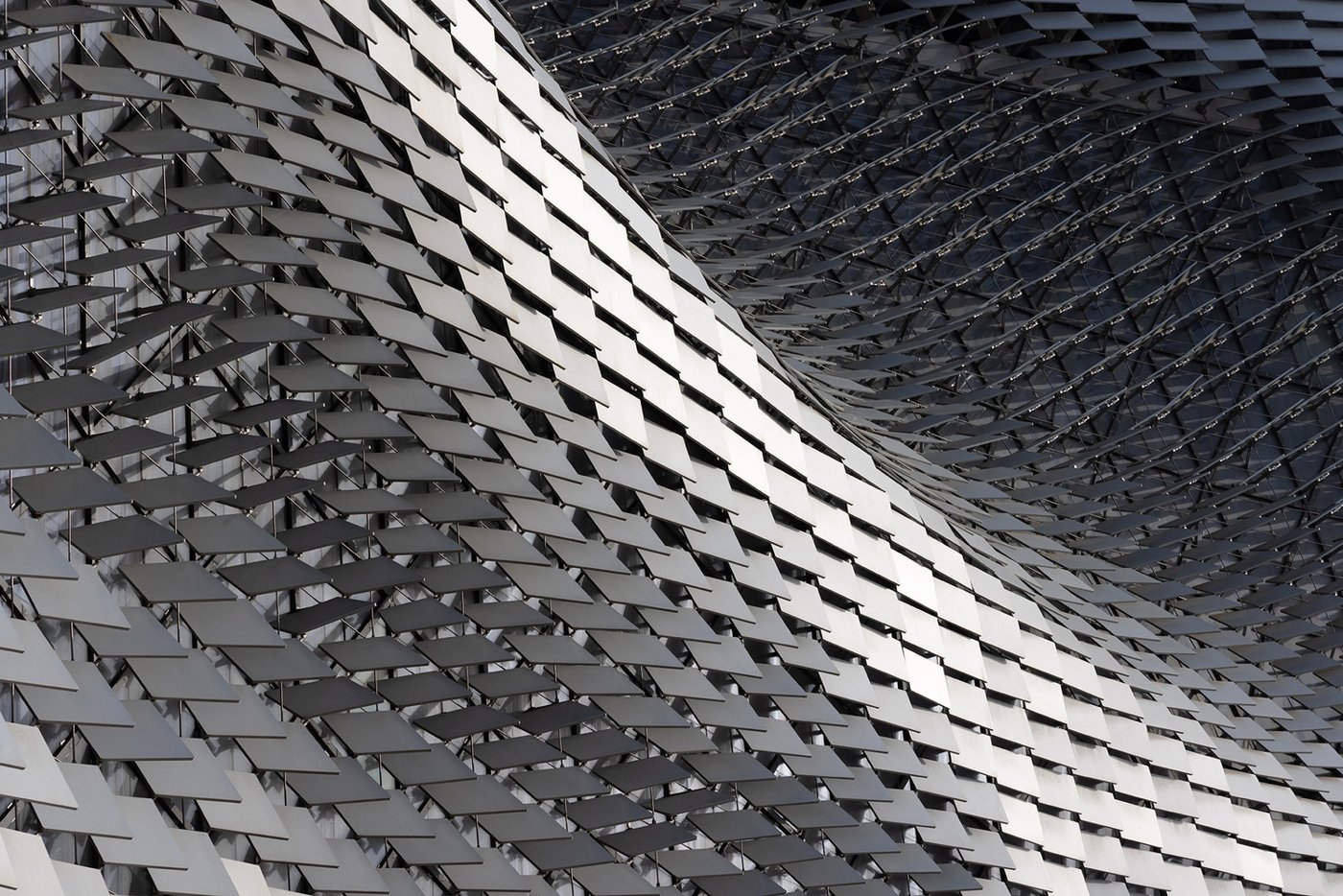
Fan Lee's claim is a large one: an anodised aluminium façade that stays clean for 25 years without maintenance, so that an owner never washes the building. He calls it solar forever, because the energy that does the cleaning is sunlight.
The first thing to understand is what it is not. It is not a coating. No layer, no lacquer, no paint, nothing applied from outside. An electrochemical process grows a very hard layer out of the aluminium body itself, and that distinction is the argument: any coating contains organic matter, and organic matter on a façade eventually destroys itself.
What the layer is made of
Their method forms a single-phase titanium crystal oxide on the surface of the aluminium, mixed into the aluminium oxide, so the anodised layer is titanium oxide and aluminium oxide together. The result is purely inorganic, which is what lets the self-cleaning effect run past 25 years instead of degrading with the film that carries it.
Two mechanisms, not one
The first is photocatalytic. In sunlight the titanium dioxide releases electrons and leaves electron holes behind, and those react with oxygen and water to generate single oxygen atoms and hydroxyls, which have strong decomposition and oxidation capability. They break the bonds between the molecules of organic pollutants sitting on the surface, turning them into carbon dioxide, which leaves as a gas, and water, which evaporates. Whatever inorganic ash is left, water gets underneath and lifts off. The reaction is antibacterial as a side effect, and it does not consume itself, which is where the 25 to 35 year figure comes from.
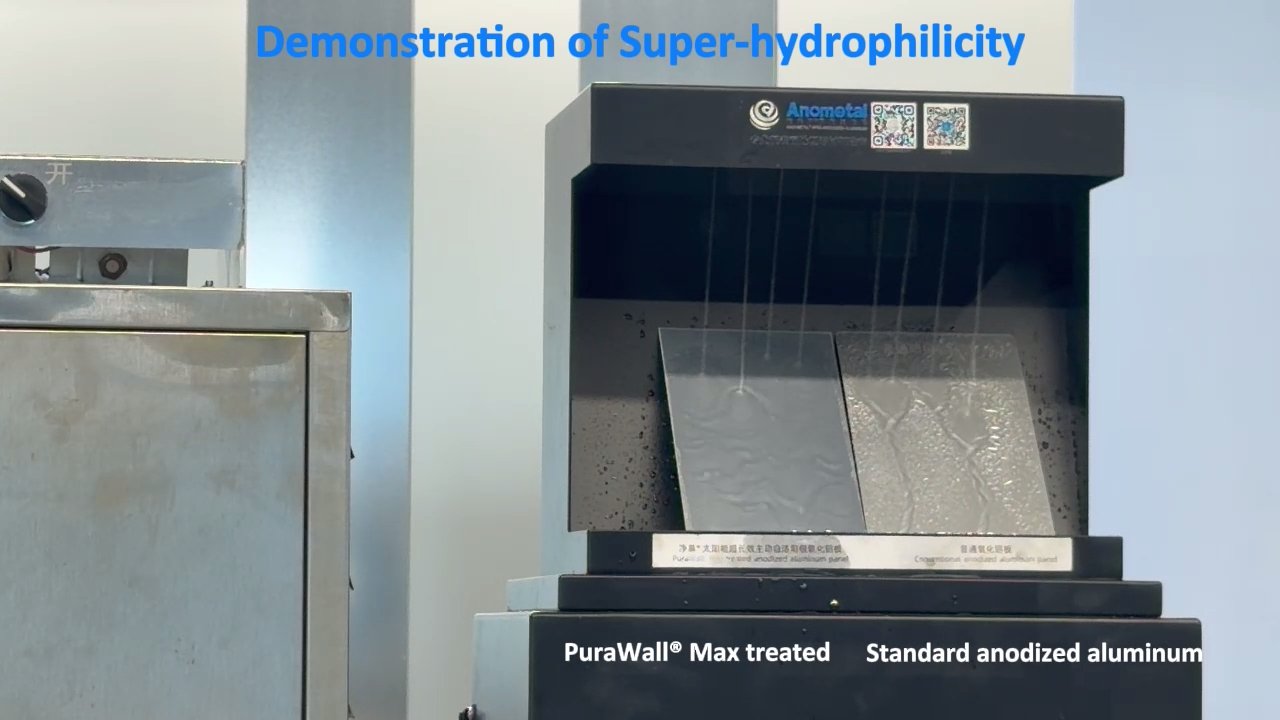
The second is superhydrophilicity. The titanium single crystal wets so completely that water lies on the surface as a flat film rather than beading into droplets. Below 10 degrees of water contact angle a surface is superhydrophilic; below 60 it is merely hydrophilic, which gives some self-cleaning but not this. The lower surface tension means rainwater soaks into and loosens the dust, and the impact of the rain then carries it off.
The demonstration
Lee had brought a machine, and the sequence is worth following because it tests the mechanism rather than the marketing. Oil goes onto the surface first, deliberately, to disrupt the superhydrophilic behaviour. Then methyl red, which acts as a contamination indicator: with the oil there, the surface reads as hydrophobic, and the red sits on it. Then an hour in a UV chamber standing in for sunlight. The red is gone, its molecules decomposed, and the oil with it, so the superhydrophilic behaviour returns. Imitate the end of a rain shower after that and there are no droplets left on the surface at all, which is the entire point: droplets are what dry in the sun into grey spots.
A third-party laboratory ran the colour test. After 24 hours of ultraviolet exposure the colour change came back at 1.15 to 1.3, against a standard that allows up to 3.
What it fixes on a real building
The failure this is aimed at is not general grubbiness. It is the staining that runs down a façade from the leaching of black organic sealant, which the surface eliminates permanently rather than hiding. Lee's example of why it matters was a museum his company supplied eight or nine years ago, 50,000 square metres of anodised aluminium in a genuinely eye-catching geometry, and therefore a building with a cleaning problem built into its shape.
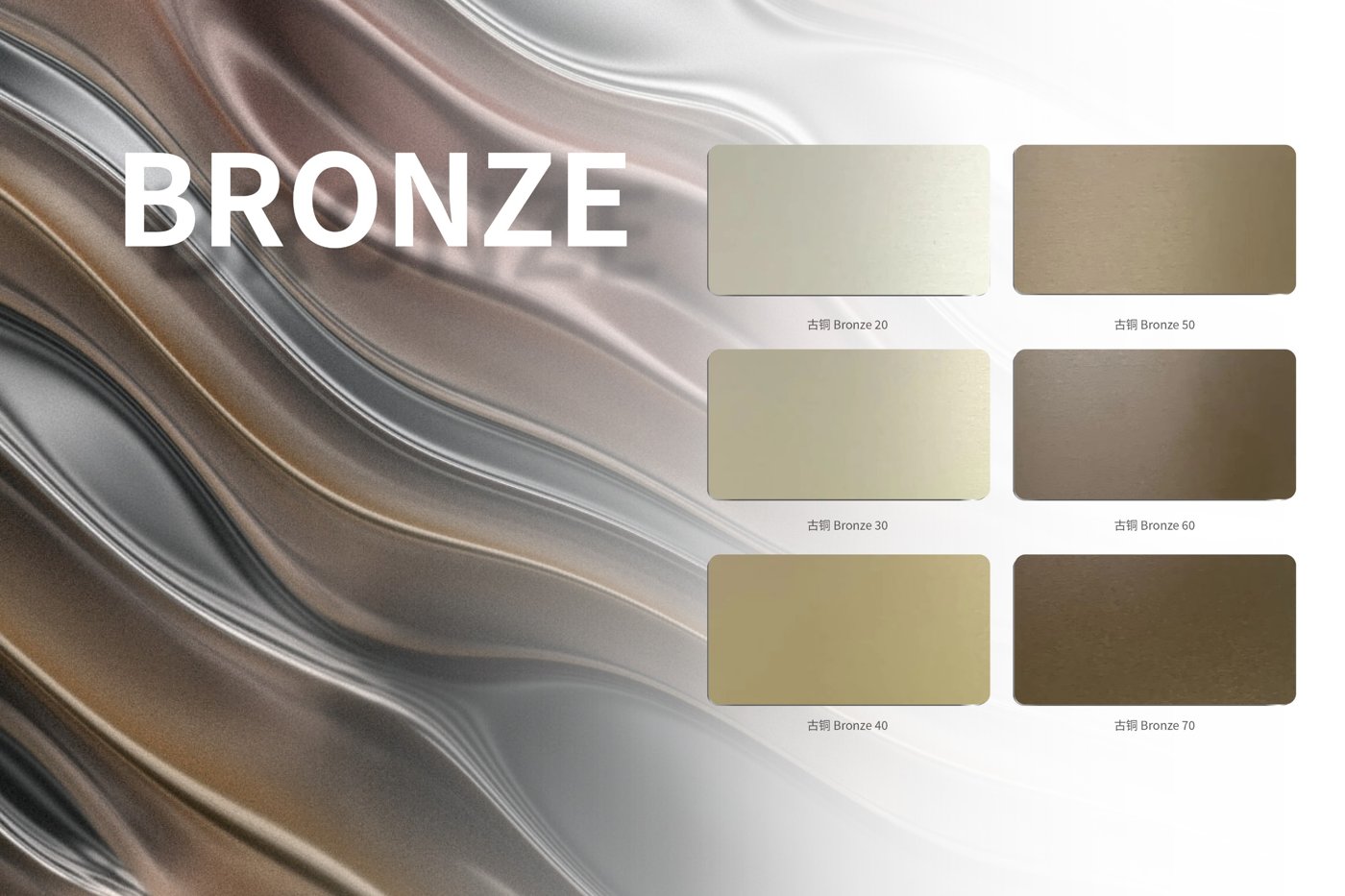
The same anodising process, he was keen to add, also carries a durable palette of outdoor colours, which is the other half of why anyone specifies it.