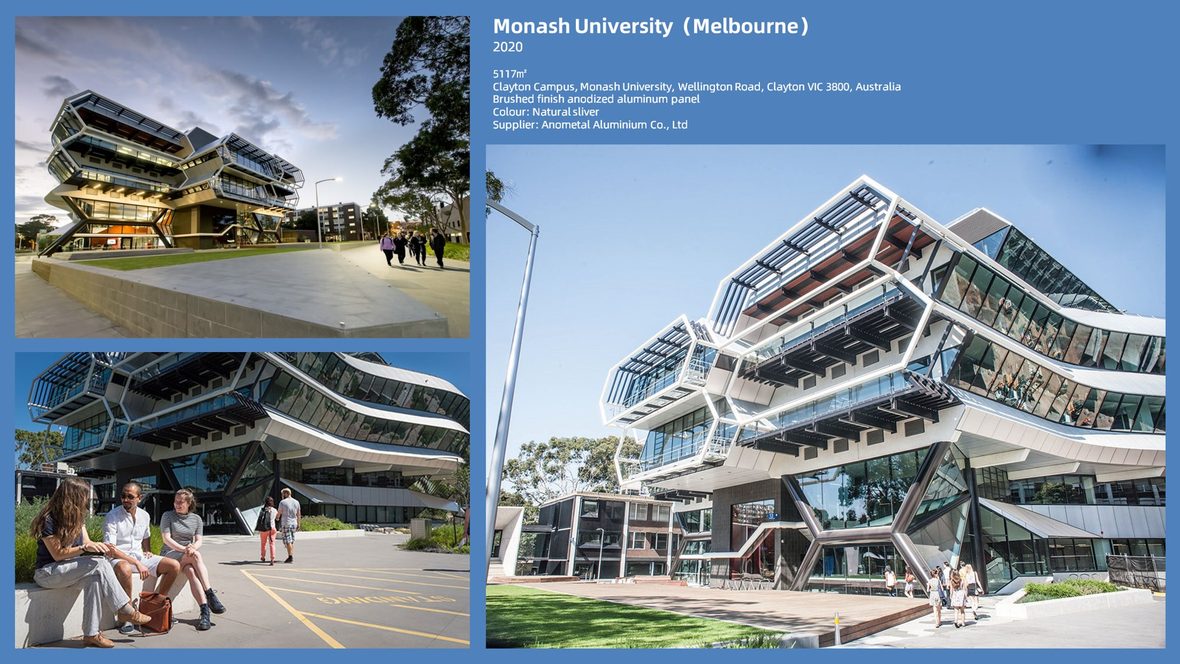
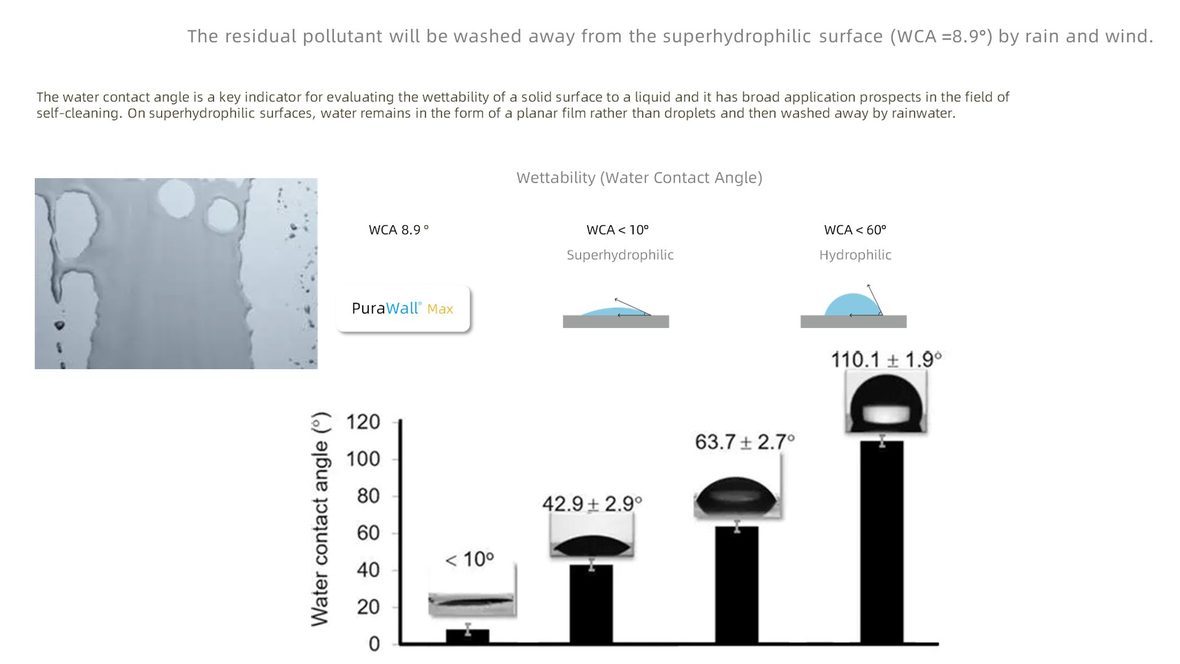
Fan Lee of Anometal described a coating-free anodised aluminium that cleans itself: photocatalysis to break down the organic dirt that makes particles stick, and a super-hydrophilic surface, measured at a water contact angle of 8.9°, to let rain carry the rest away. Grown inorganically with the aluminium-oxide layer, it is rated past 25 years, on the buildings nobody can reach to wash.
Anometal is a chemical company in downtown Shanghai, and Lee noted the oddity of that: a factory still operating inside a city that size. It was founded in 1995, and from 1998 it built coil anodising from scratch, at a time when it was the only company doing mass-production coil anodising anywhere in Asia, with none in China, Japan, Korea, Thailand or Australia. It now runs three anodising lines. Anodising is an electrochemical process, complicated and prone to random behaviour, so those thirty years have been thirty years of daily debugging, and what the company banks is tens of thousands of debugging techniques.
The problem he came to describe is cleaning. He showed a science museum finished about ten years ago, 50,000 square metres of façade, every elevation a shaped piece of it, and beautiful when new. Then it got dirty, and there is no way to clean it: no machine, no lift, and the thin steel bar behind each panel will not carry a person. Architecture is no longer the cubic box of 1960s Wall Street, he said; there are curves and lines and something the architect is trying to say, and the consequence is that maintenance is not merely expensive but sometimes impossible.
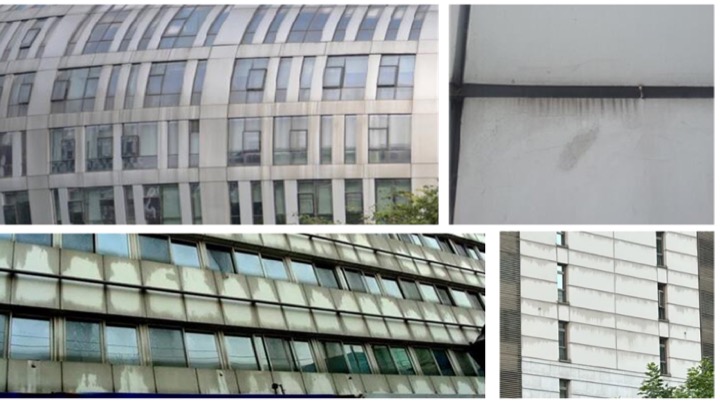
Painted panels have their own version. Silicone oil migrates out of the sealant between panels and runs down the face, what the industry calls sagging stain. On a good paint you can wash it once or twice a year for ten or fifteen years. After that it cannot be cleaned at all, and the choice is to live with it or replace the panel.
The product he brought, PuraMax, branded Solar Forever because the energy comes from the sun, does two things at once, and he was at pains to say what it is not: no coating, nothing applied on top of the anodising layer, a question he has been asked repeatedly for three years. Of the three kinds of self-cleaning known, he set aside the weakest and used the other two. The strongest is photocatalysis, which he was careful to call a discovery rather than an invention, made by two Japanese scientists in 1972: the ultraviolet in natural sunlight decomposes organic matter, with antibacterial and anti-mould properties as a side effect. The second is hydrophilicity, and the reason it matters is surface tension. The smaller the water contact angle, the better the surface wets, so rain wets and loosens the dust and the impact force of the rain washes it off. That effect lasts at least ten to fifteen years.
Why organic attempts failed is the heart of it. Dirt sticks to a façade mainly through its organic fraction; ash on its own has little grip, and anodised aluminium in particular carries no charge, so it absorbs nothing. Companies in Europe and the United States spent decades on self-powdering paints, titanium dioxide mixed into PVDF, PVF and PE resins. But photocatalysis has no selectivity: it destroys the paint as readily as the dirt, so the film thins year by year and stops working after five or six. Japan found the way around it by mixing the powder into ceramic and firing above 1,000 degrees, and self-cleaning tiles have kept houses and towers in Tokyo and Okinawa clean for more than thirty years.
Anometal’s claim is to have moved that into metal. A single-phase titanium crystal oxide is formed on the surface at room temperature, created together with the aluminium oxide rather than laid over it, the two mixed through one another like a rocky-road ice cream, on a material that melts at 660 degrees. The result is a purely inorganic self-cleaning oxide layer, rated beyond 25 years, and in his own estimate good for fifty, though he added that he is not old enough to check.
Two third-party tests carried the argument. Four aluminium samples of the same colour, three of them inked red, went into a UV chamber for 24 hours and came out silver, the ink decomposed, a colour shift far beyond the threshold a colour-difference standard would normally allow. And the wetting: hydrophilic means a contact angle under 60 degrees, super-hydrophilic under 10, and the measured surface came in at 8.9.
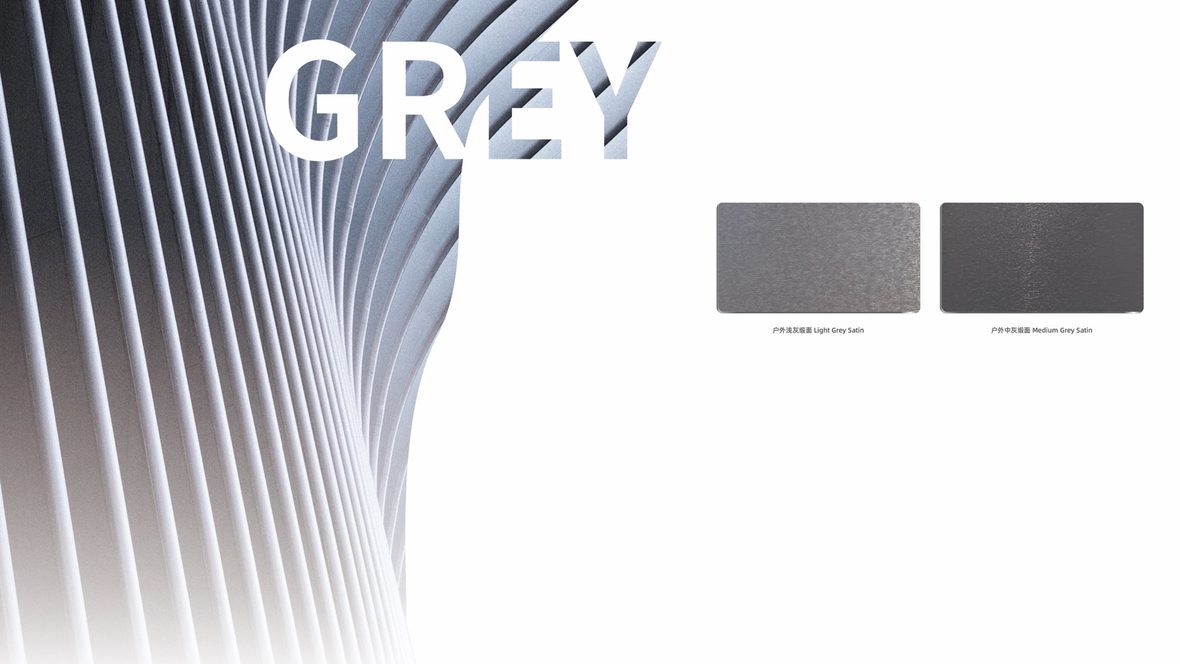
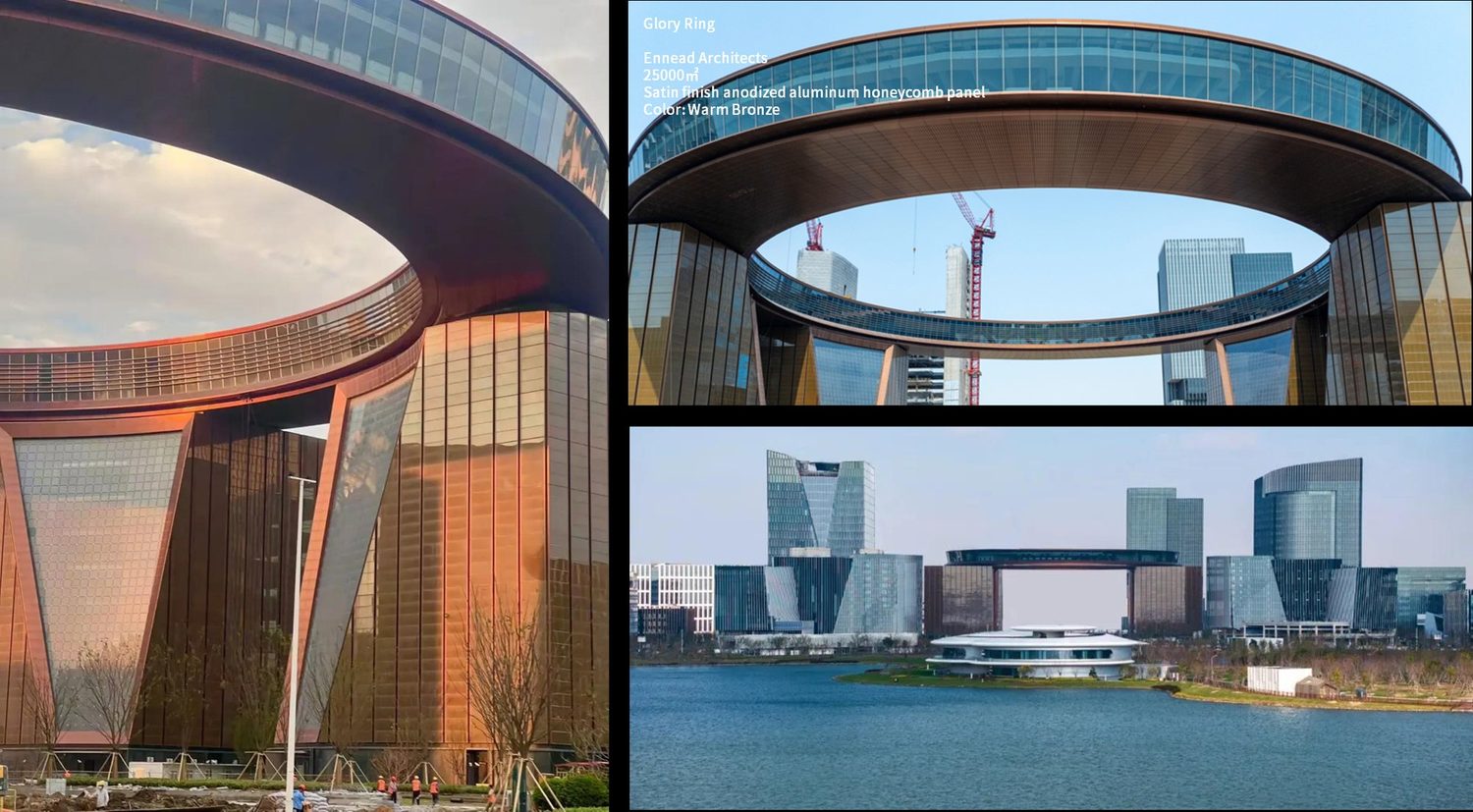
The last claim was colour. Anometal says it is the only company in the world able to produce a UV-stable outdoor grey. Lee closed on projects, Monash University in 2020 and two in Sydney, one still going, a large ring in Shanghai with an American practice, a stadium, and work with a French architect, all of it argued as the case that a pre-anodised aluminium can carry the appearance a complex façade wants and then keep it without maintenance.