


Allan Ramsay made the case for aluminium that reads as timber: modular, Australian-made systems whose timber pattern is sublimated into 95% of the depth of the powder coat rather than sprayed on. The warmth of wood with the longevity of metal, non-combustible where the wraps and composites all fail AS 1530, and maintenance he summed up as ‘hose it down’.
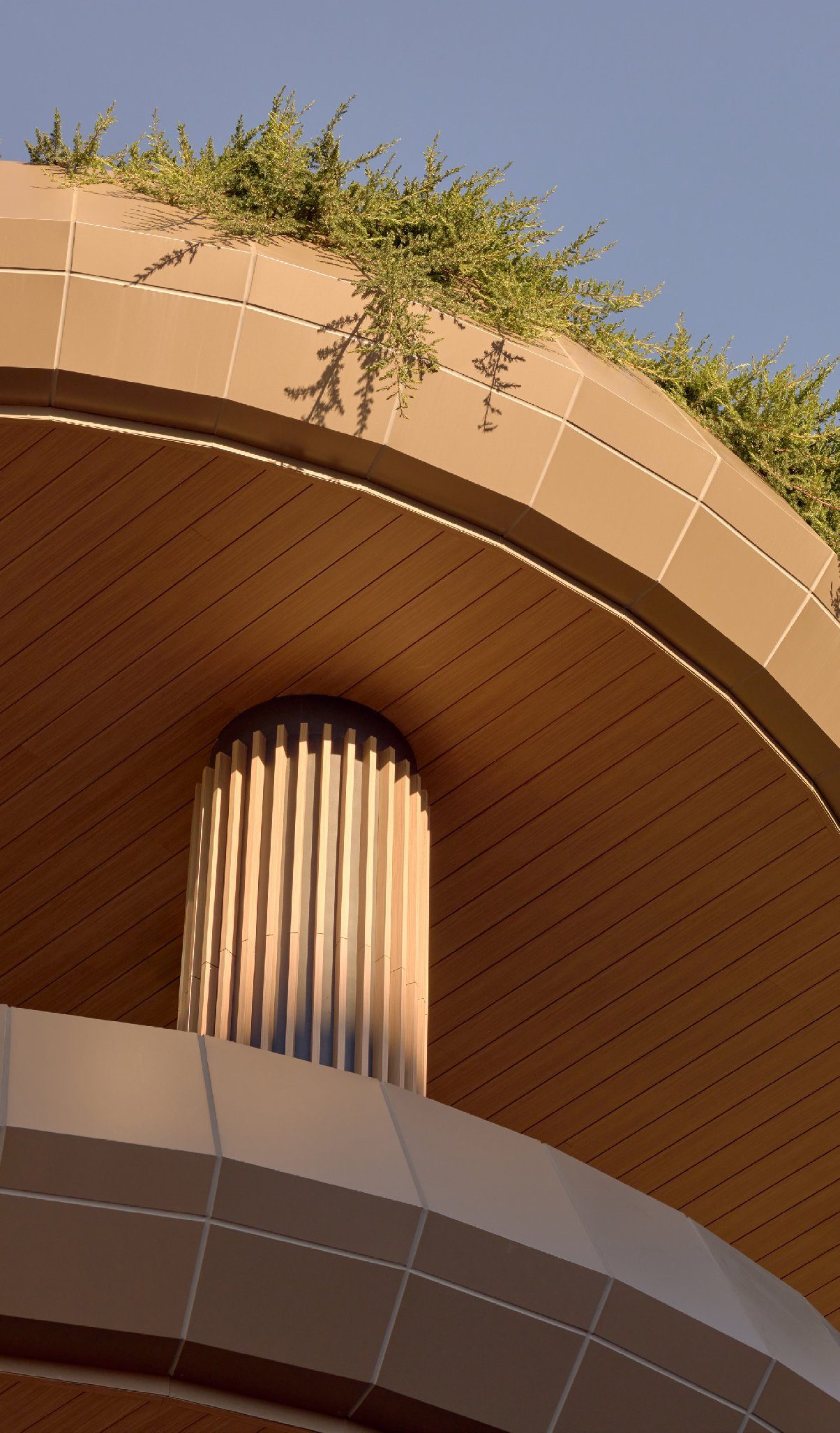
A self-described Queenslander with a cheerfully irreverent delivery, Ramsay looks after training, CPDs and business development for Knotwood, which was set up some sixteen or seventeen years ago to make robust, long-life aluminium systems powder-coated and sublimated to read as timber. It grew out of a demand for modular systems with concealed fixings and effectively no ongoing maintenance, and everything that arrives on a job is made in Australia. The company now has well over a hundred employees around the country, with offices in the UK, the United States and New Zealand.
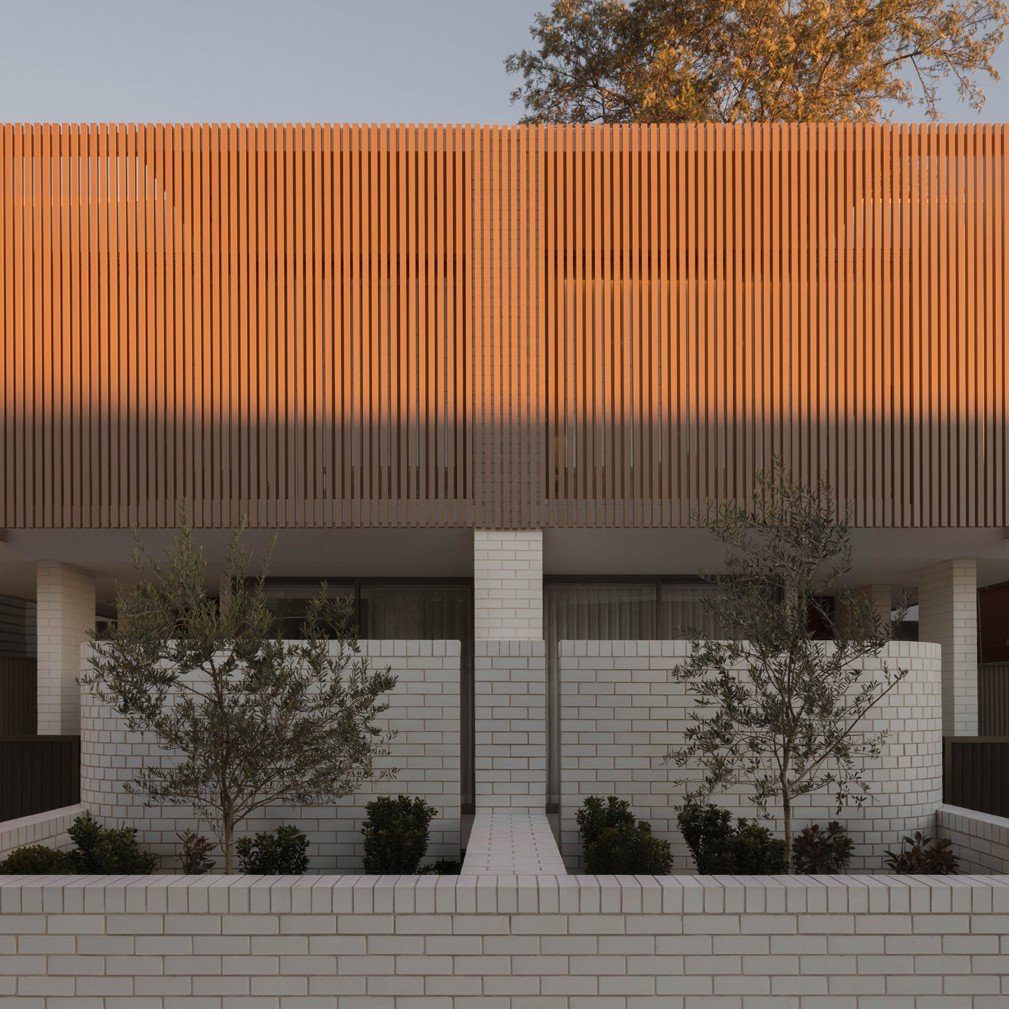
The product range is cladding, battens, slats and decking: cladding at 100, 200 and 300 mm, batten and slat systems that self-mate and click together, every fixing hidden, around a hundred profiles across the suites. All of it is fully recyclable, free of volatile organic compounds, non-combustible against AS 1530, insect proof, very lightweight and, as he had it, maintained by hosing it down.
His single-slide case for aluminium was the one thing he wanted anyone to take away. Long life. Lighter and stronger. It will not warp, swell, grow mould or rust. Extreme colour stability. Non-combustible, clearing every clause of AS 1530 rather than squeaking past it. Scratch resistant, though when an architect on the Gold Coast went at a sample with her nails and then asked about a screwdriver, he conceded that a gouge is a gouge and the material is not bulletproof either.
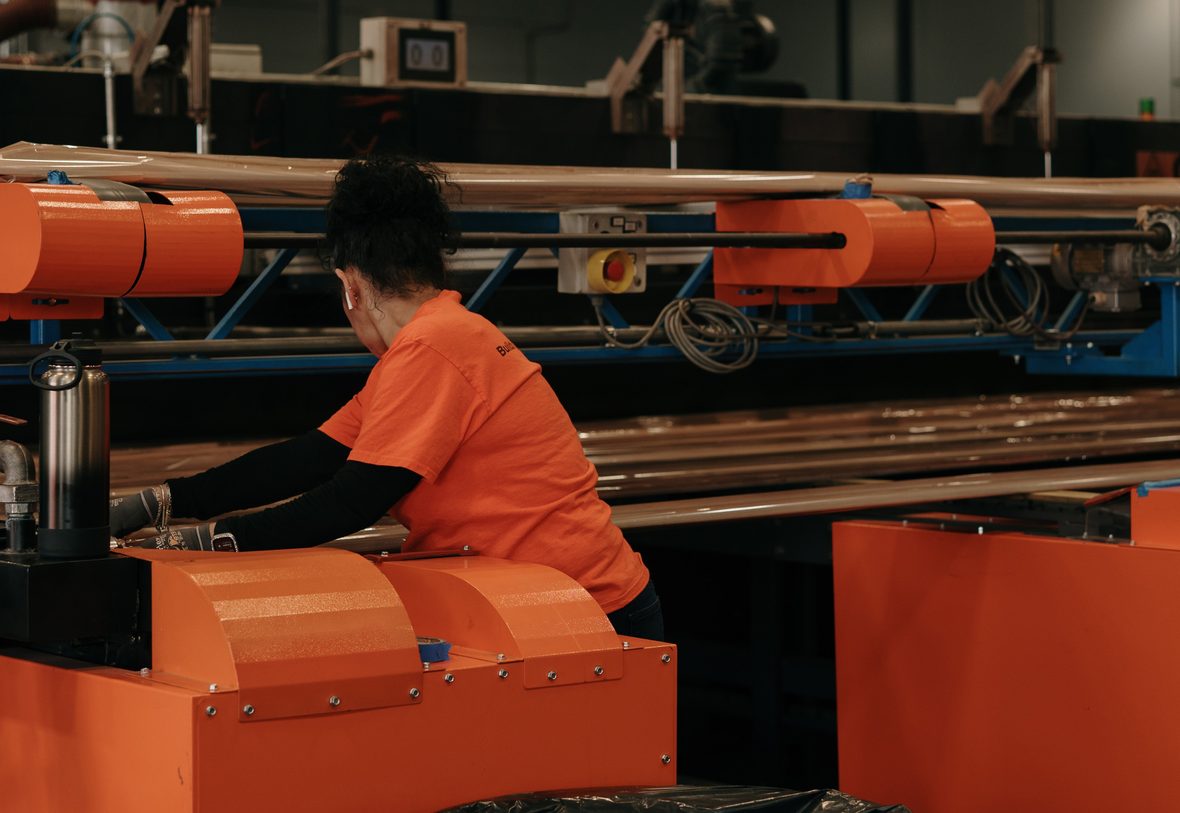
How it is made is the part that carries the claim, and it has four stages. Extrusion brings the aluminium to profile. Then a pre-treatment, where the metal is cleaned down to the fingerprints, staff handling it in industrial-strength gloves. Then powder coating, on both vertical and horizontal lines, the powder electrostatically charged so it is drawn onto the metal, which cuts overspray, with unused powder reclaimed and recycled, then cured to a thick base coat that carries the resistance to abrasion, corrosion, weather, humidity and ultraviolet. Then sublimation, which is where the timber look comes from: the coated profile goes into a film, the air is drawn out, and the whole thing is baked, so the chemical reaction drives the pattern down into about 95 per cent of the depth of the powder coat. It is not sprayed on, painted on or stuck on. The coating is certified through the Florida exposure regime that sits behind the AAMA 2604 commercial standard, on architectural-grade T5 alloy.
He was blunt about the alternatives, and each comparison ended the same way. A timber-grain wrap, aluminium with a polymer film, is durable, flexible, chemically resistant and optically clear, but does not care to be set on fire. Aluminium composite panel has good thermal qualities and looks superb, and fails AS 1530.1 and .3. Wood-plastic composite is low-maintenance, resists rot and decay and will not warp, though it is weighty, and it fails the same tests just as badly.
Sustainability, he argued, is currency: a business without it will not have much cash either. The numbers he gave were specific. No VOCs, no lead. Everything recycled down to the swarf and the waste on the floor. A 150 kW rooftop solar system generating 200,000 kWh a year. 7.2 million litres of water a year recycled in a closed loop. Biodegradable packaging throughout. He had been cross-examined on exactly this by his daughter after a year nine science class, and reported that the answer passed.
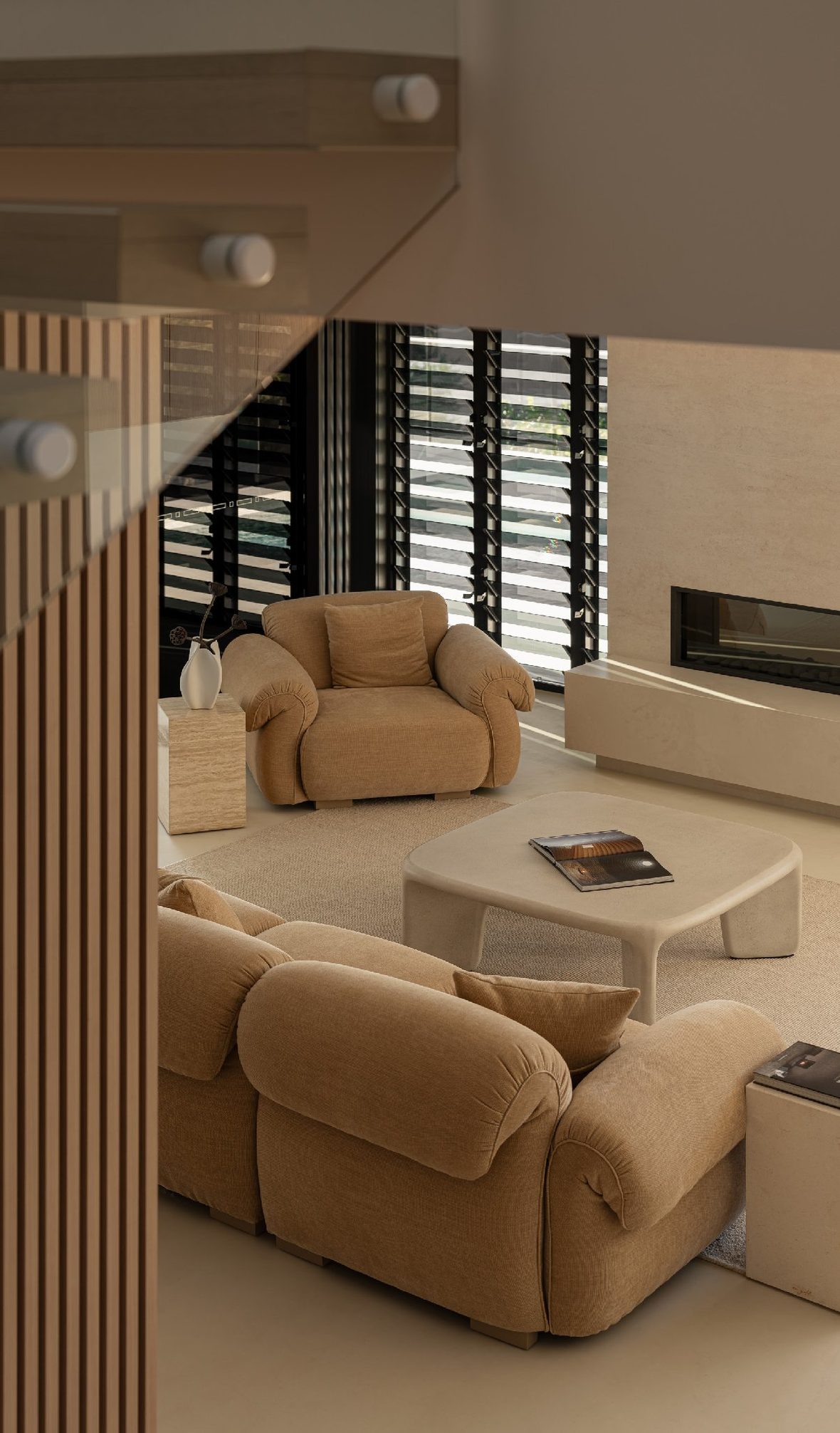
The applications run well past façades, to gates, fences, ceiling cladding, pergolas and shutters, inside as readily as out, where it lasts longer still. The cladding is certified against water ingress, and every product carries a wind rating from the mildest classification up to the cyclonic ones, so a drawing and a location are enough to get the certification back. Even the decking, not a façade product, ties into the work: rated for slip resistance and to a bushfire attack level of 40, which is what lets someone stand on it right up against the façade. Under the jokes the proposition was simple: it is the powder coating and the sublimation that produce what the company calls beautiful forever, an Australian-made system with the appearance of timber, the longevity of metal, and the compliance paperwork already done.